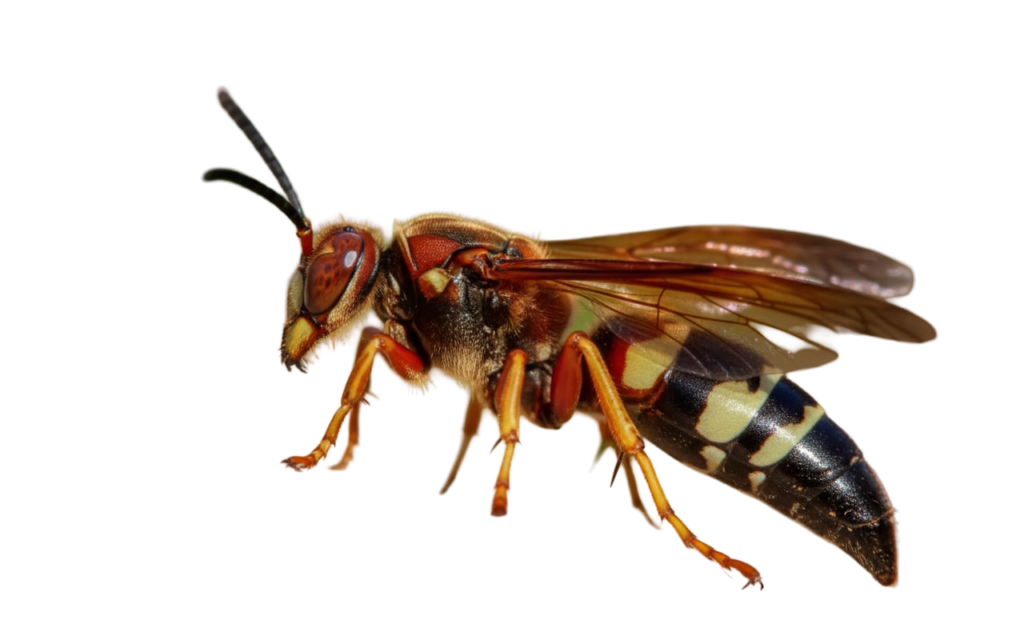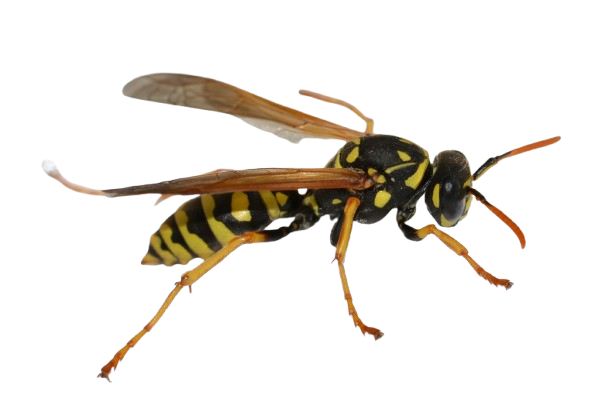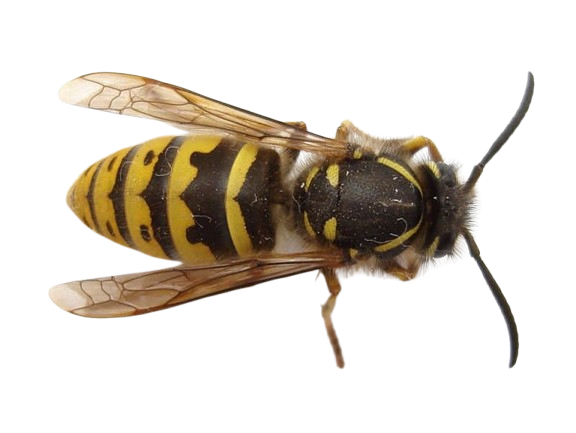
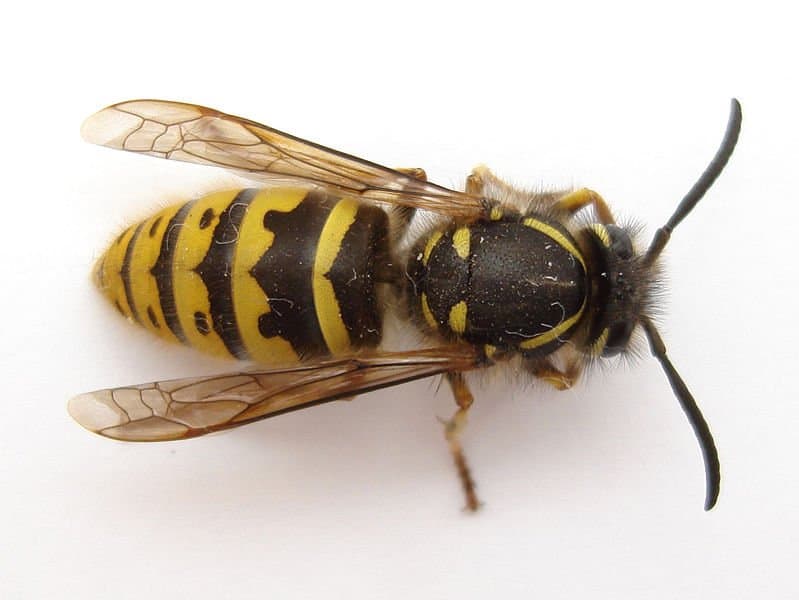
Wasps and hornets are sleek, narrow-bodied insects with smooth exoskeletons and distinct “waists.” Wasps are smaller, usually bright yellow and black with long dangling legs, while hornets are larger, with orange-brown or reddish markings and a broader head.
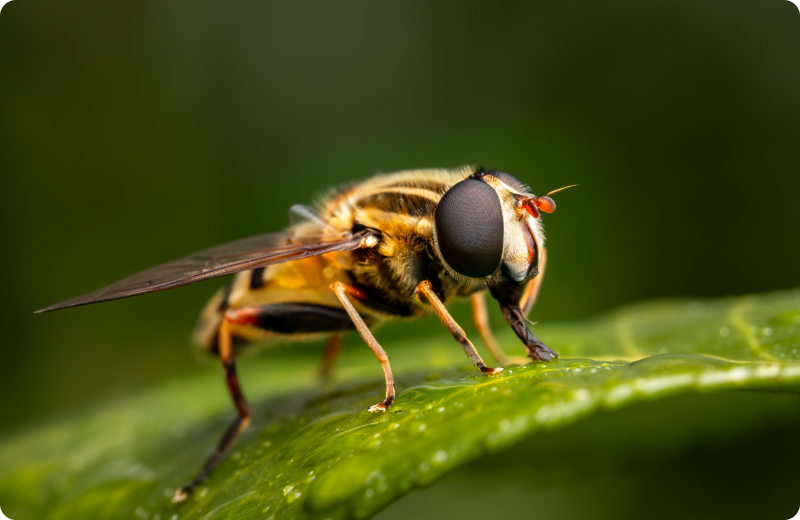
Types of Wasps and Hornets – That Bite or Sting
Yellowjacket Wasps
Paper Wasps
Cicada Killer Wasps
Both have transparent wings, smooth stingers that allow multiple stings, and their shiny, segmented bodies give them an intimidating, predatory appearance.

Family: Vespidae
How Santera Helps Get Rid of Wasps & Hornets
Wasps and hornets are known for their painful stings rather than bites. Equipped with smooth, retractable stingers, they can sting multiple times without dying, unlike bees. Their venom causes sharp pain, redness, and swelling, and in severe cases, allergic reactions. Hornets, being larger, deliver more potent venom, making their stings more intense. Both species sting primarily when they feel threatened or when their nests are disturbed.
While Yellowjacket Wasps don’t typically cause structural damage, they often build nests inside walls, attics, or underground, which can lead to property issues if left untreated. Their aggressive nature also poses a stinging threat to people and pets, making prompt removal essential.
You should contact a pest control expert immediately if you spot frequent wasp activity around your property or locate a nest near entry points, gardens, or outdoor areas. Attempting to remove a nest on your own can be dangerous—professional intervention ensures safe and effective elimination of Yellowjacket Wasps.
Paper Wasps don’t typically cause structural damage, but their nests can appear in vulnerable locations such as roof eaves, window frames, or outdoor light fixtures. If left unchecked, they may rebuild nests each season, posing a stinging risk to people and pets nearby.
Call a pest control expert if you see Paper Wasps frequently flying around your property or notice a nest forming near entryways, patios, or sheds. Removing a nest without the proper equipment can lead to painful stings; professional help ensures a safe, effective removal.
Cicada killer wasps don’t damage buildings or wood like termites or carpenter bees. However, they can dig noticeable burrows in lawns, gardens, and around walkways. Their nesting activity may loosen soil or create unsightly mounds, especially if several females nest in the same area. While their digging is mostly harmless, it can disrupt the appearance of maintained lawns.
If you notice multiple burrows, increased wasp activity, or feel unsafe using outdoor spaces, it’s time to call a pest control expert. A professional can safely locate and treat burrows, prevent re-nesting, and advise on lawn care practices that make the area less attractive to wasps. Professional help is especially recommended in areas with children, pets, or heavy outdoor use.

Protect your home or business from wasps and hornets by learning identification and effective control techniques.
Wasps and hornets vary in size, typically ranging from 0.5 to 1.5 inches in length. They have slender bodies with narrow waists, smooth skin, and bold yellow, black, or brown markings. Hornets are generally larger and more robust than common wasps. Their fast flight and loud buzzing can make them appear aggressive.
Keep outdoor areas clean and free from exposed food or sugary drinks. Secure garbage bins, seal cracks around walls and roofs, and repair damaged screens. Reduce standing water and inspect eaves, sheds, and trees for early nest formation. Avoid disturbing active nests and contact professionals if nesting activity is noticed near living or working spaces.
Wasps and hornets build nests from chewed wood fibers, creating paper-like structures attached to roofs, walls, trees, or underground spaces. Queens lay eggs inside the nest cells, where larvae develop and are cared for by worker wasps until they mature into adults.
Adult wasps and hornets feed on sugary substances such as nectar, fruit, and human food. They also hunt insects like flies and caterpillars to feed their larvae, helping control other pest populations.
Wasps and hornets are social insects and are most active during warmer months. They can become aggressive when their nests are threatened and are capable of stinging multiple times. While they contribute to insect control, their presence near homes and businesses can pose safety risks.
Visit the santera Pest Library to learn how to identify and control every pests.
Paper Wasps (Polistes spp.) are slender wasps with long legs and narrow waists, typically brown or reddish with yellow or
Read MorePaper Wasps feed on nectar, fruits, and sugary substances, but they also prey on caterpillars and soft-bodied insects, helping to
Read More