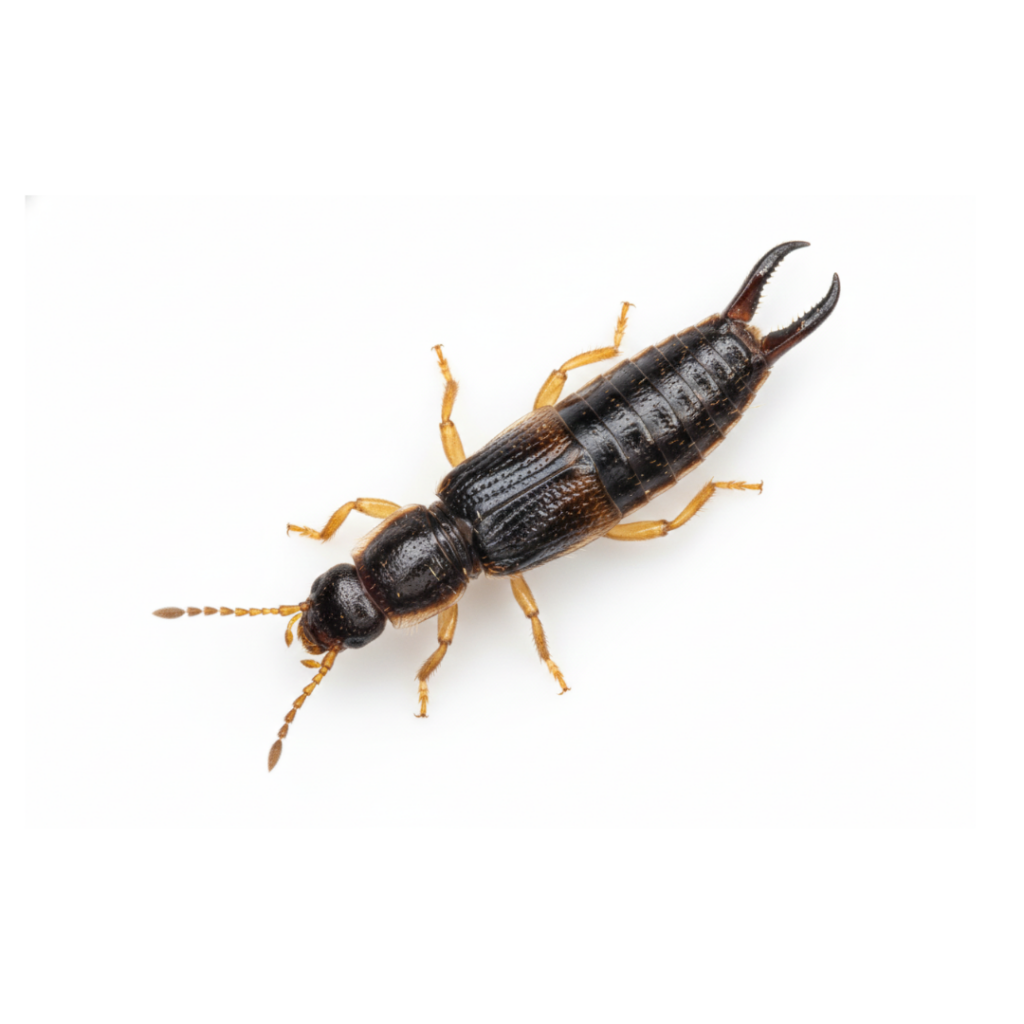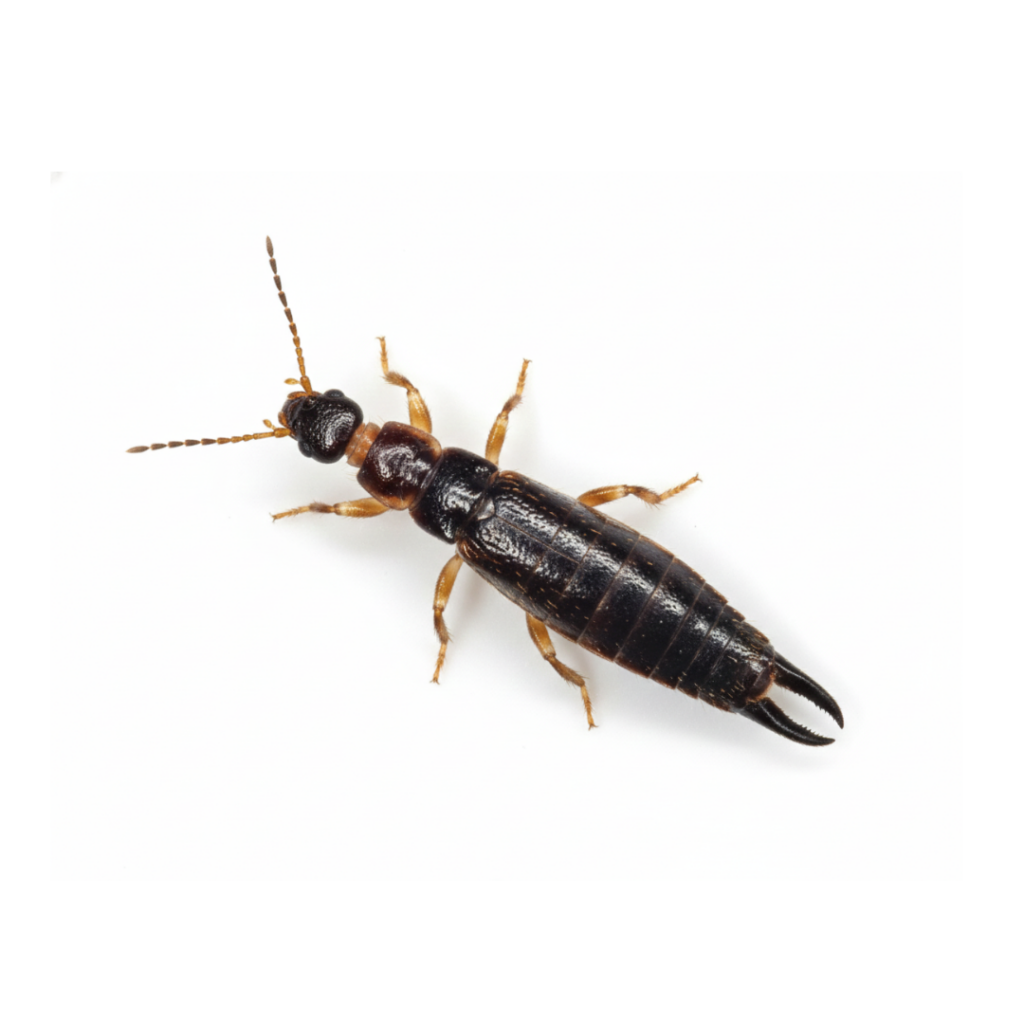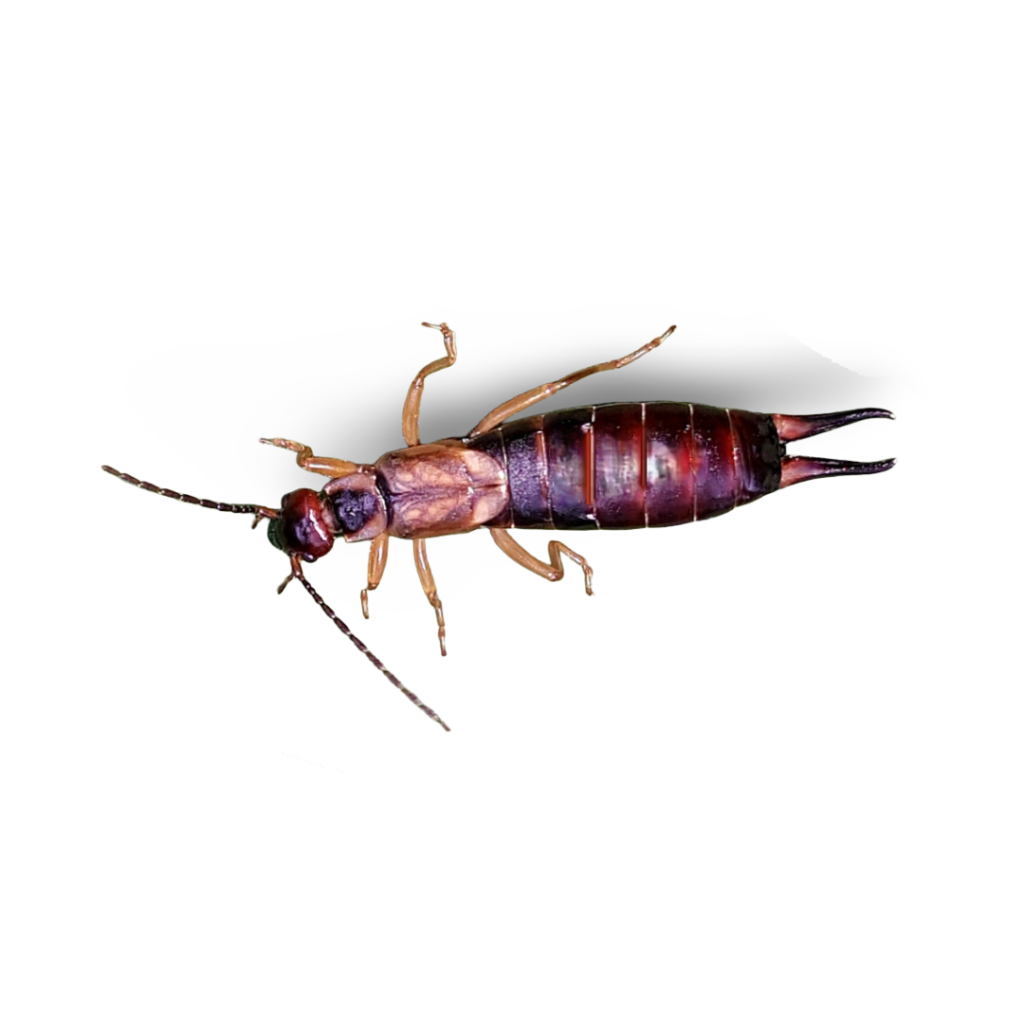
Earwigs prefer cool, damp, dark areas. Outdoors, they hide under mulch, stones, wood piles, or leaf litter. Indoors, they can be found in bathrooms, kitchens, basements, or laundry rooms, wherever there is moisture.
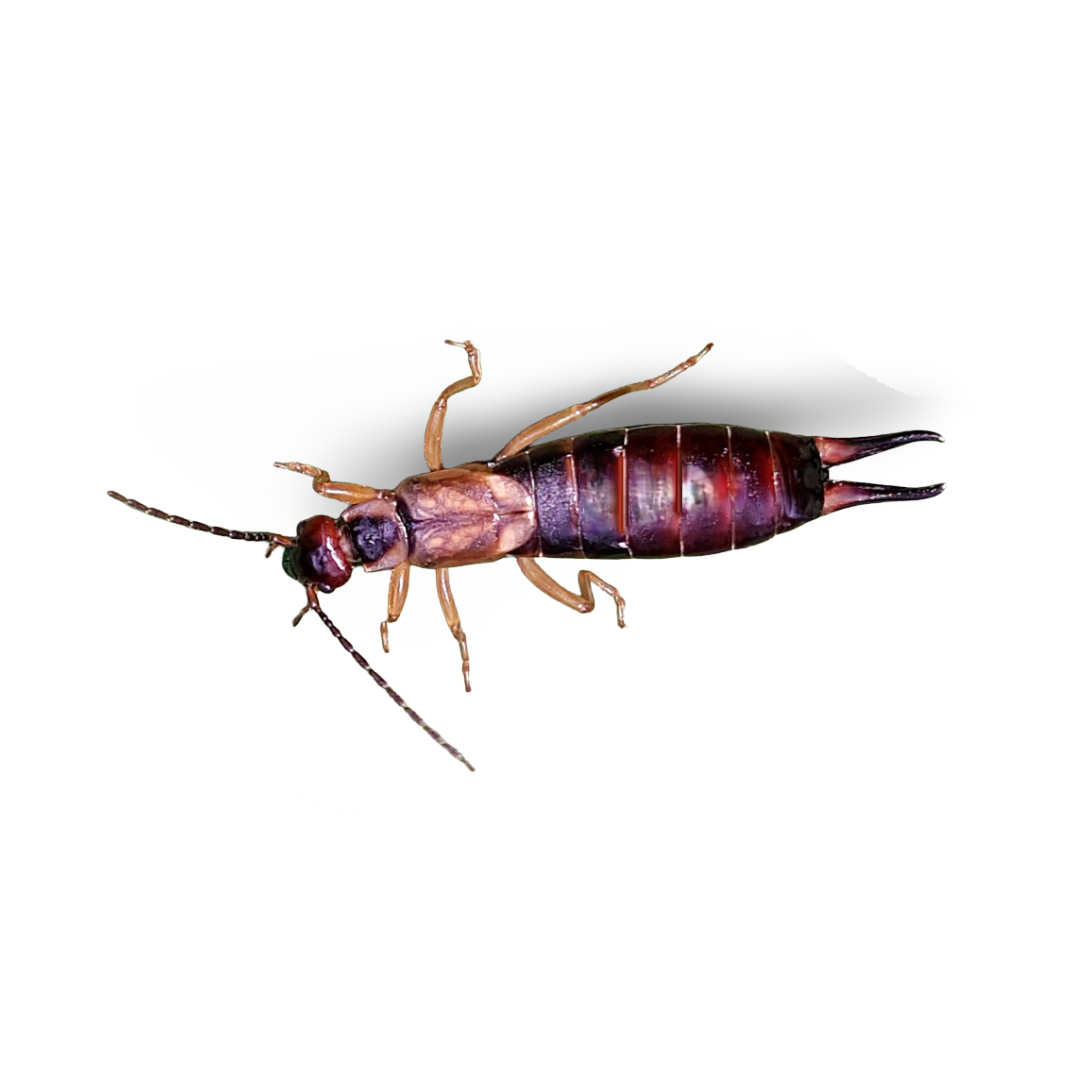
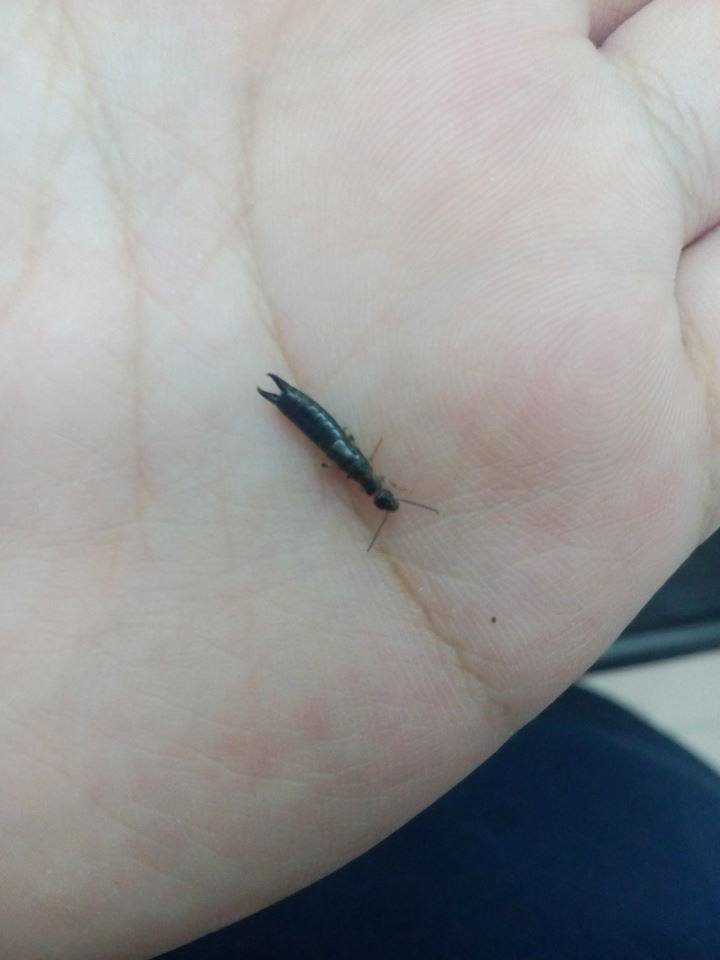
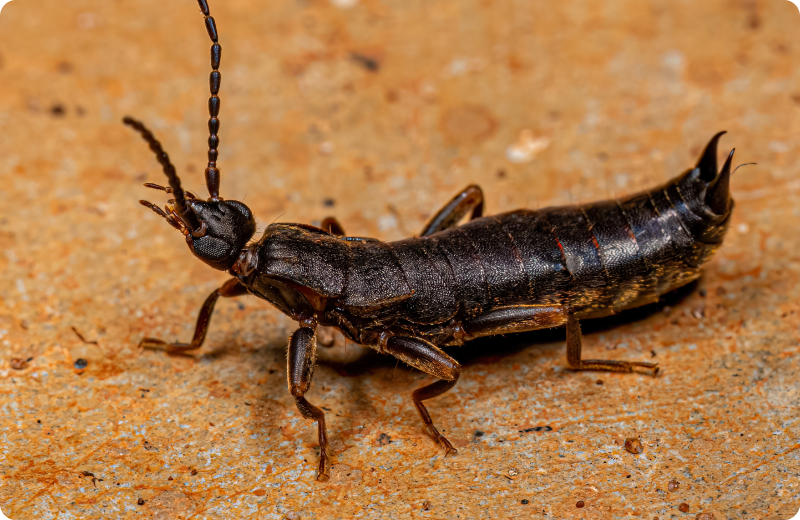
Earwigs are slender, elongated insects measuring 5–25 mm long. They are reddish-brown to dark brown in colour with flattened bodies and a pair of distinct pincer-like appendages (cerci) at the rear, curved in males and straighter in females. Nymphs resemble smaller, lighter versions of adults and develop through multiple molts.
Family: Forficulidae
To really get rid of earwigs, you need two things: stopping them before they start, and treating them directly. Santera’s experts begin by checking your place to find where they’re living and breeding.
We then put down safe, targeted treatments, and we suggest ways to change the areas they like so they don’t come back. Since every home is different, knowing exactly where moisture and debris are piling up is the key to getting a grip on the problem and keeping things under control.
They enter in search of moisture, shelter, and food, especially during wet or hot weather.
No. Earwigs do not spread diseases. While they may pinch if handled, their forceps rarely break the skin.
Some species may chew on leaves, flowers, or soft fruits, but damage is usually minor.
Reducing moisture, sealing gaps, and clearing mulch and debris around foundations can help. For persistent infestations, professional treatment is recommended.
If outdoor hiding spots or moisture sources are not eliminated, new earwigs may re-enter regularly.
The more you know about earwigs, the better you can prevent them.
Earwigs are omnivores. They feed on decaying plants, small insects, and organic material.
Found under mulch, stones, wood, and damp crevices indoors and outdoors.
Egg → Nymph → Adult. Females lay eggs in soil and often guard them until hatching.
They thrive in moist, sheltered areas and seek refuge indoors during dry or cold weather.
Primarily nocturnal, earwigs crawl into tight spaces and are attracted to light at night.
Visit the santera Pest Library to learn how to identify and control every pests.
Earwigs don’t bite. If handled, they may pinch with their forceps a harmless but brief pinch.
Look for them under stones, mulch, firewood, potted plants, or in damp basements and bathrooms.