Protect your home, pets, and family from ticks by learning how to identify, prevent, and control these tiny parasites before they spread disease or discomfort.
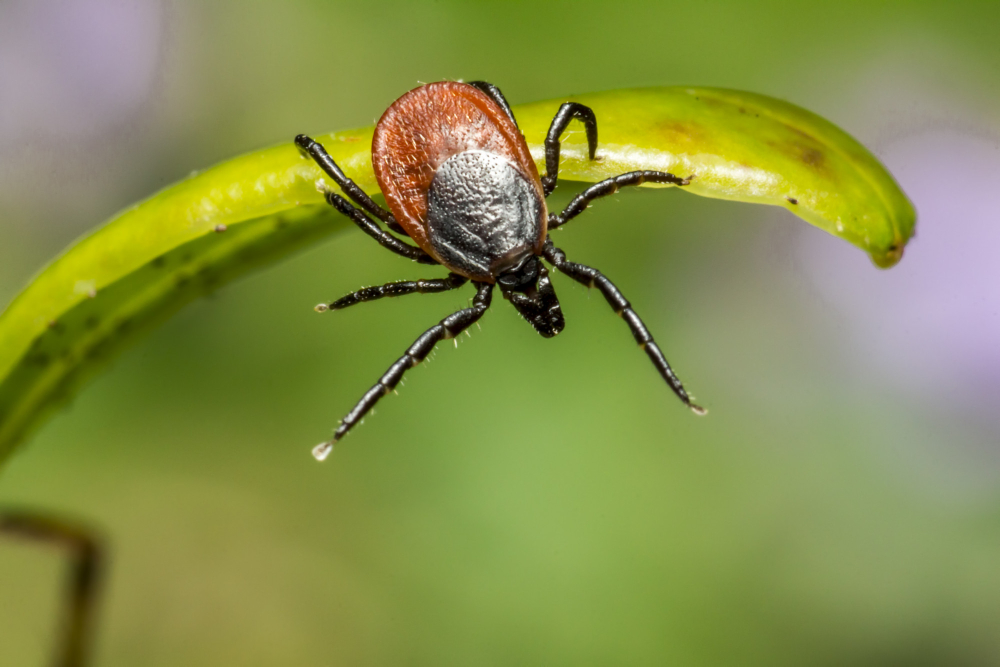
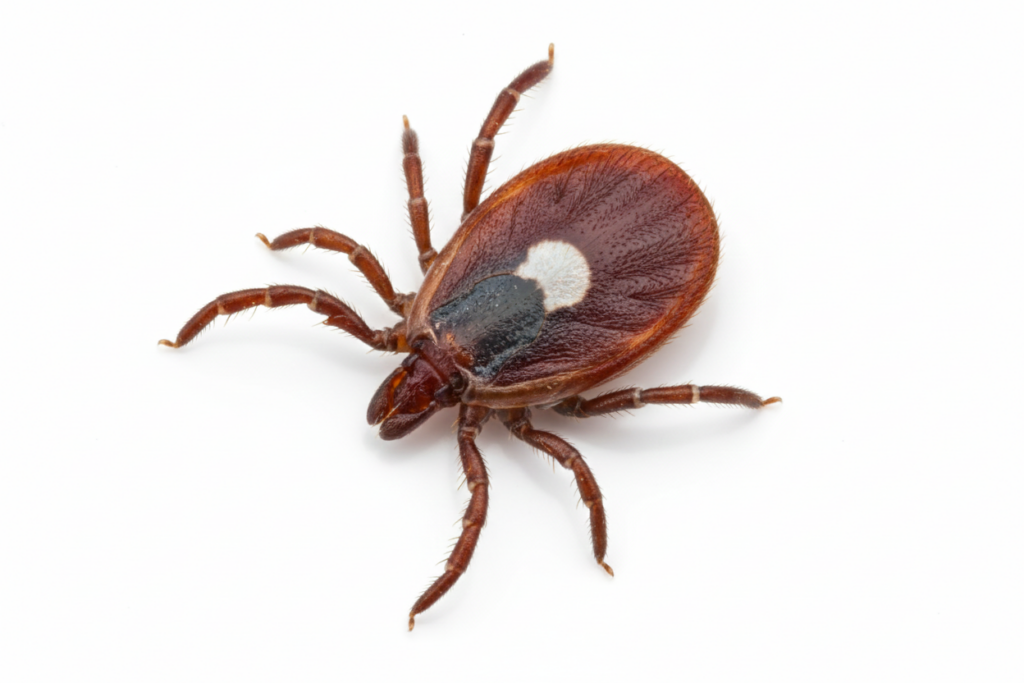
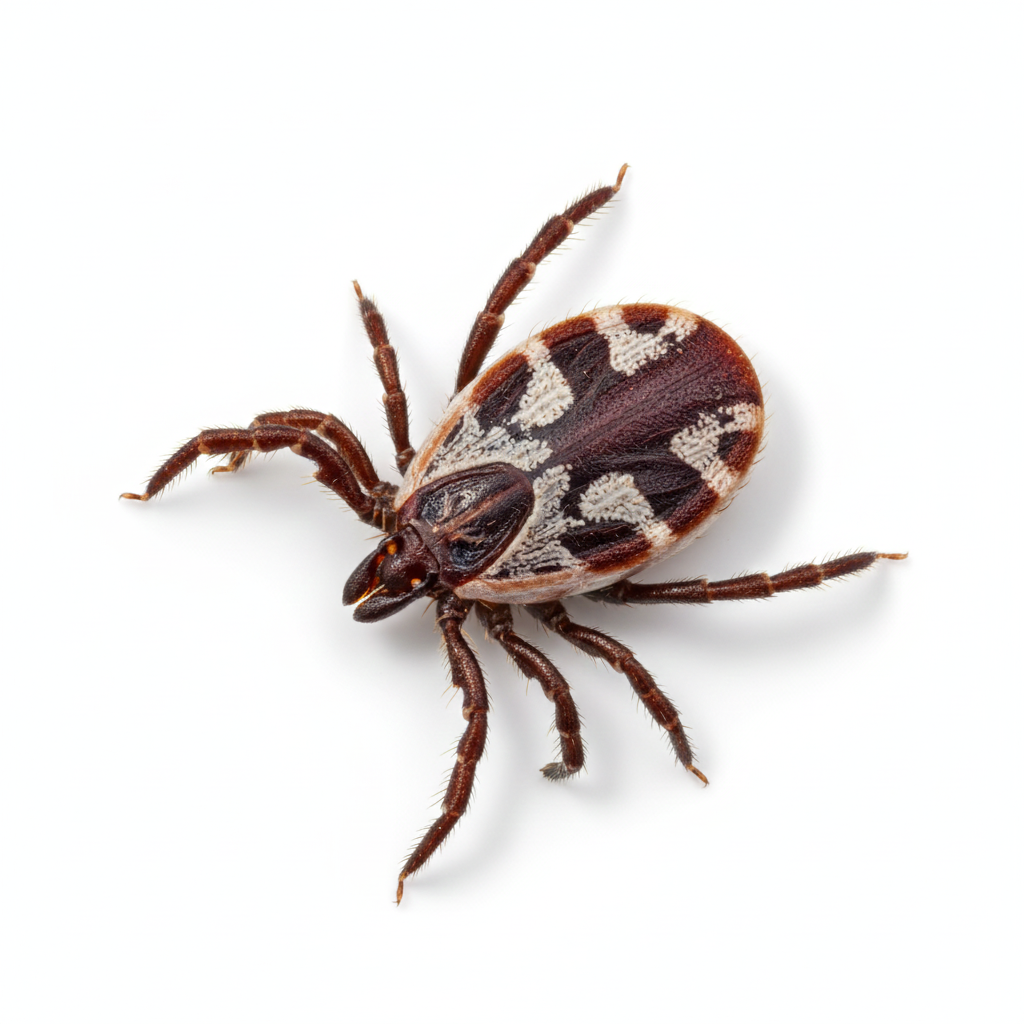
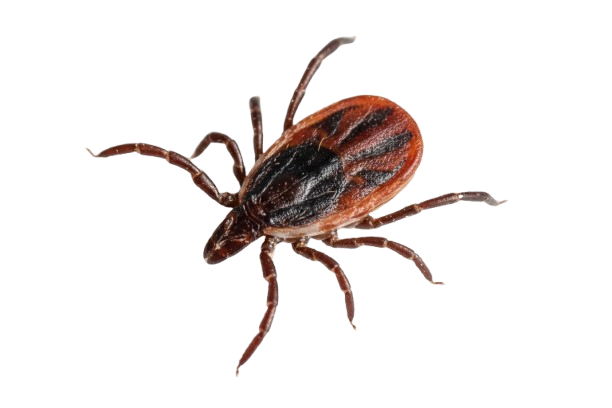
Ticks are small, oval-shaped arachnids with flat bodies that swell after feeding on blood. They range in color from reddish-brown to black and vary in size from a pinhead to a small pea once engorged. Unlike insects, ticks have eight legs and no antennae.
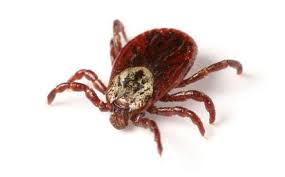
Family: Ixodidae
How Santera Helps Get Rid of Ticks
Tick removal and prevention require a combination of habitat treatment, pest exclusion, and pet protection.
Santera professionals are trained to identify tick hotspots, treat infested areas using family- and pet-safe solutions, and apply long-lasting repellents to prevent re-infestation.
Using Santera’s proven A.I.M. approach — Assess, Implement, Monitor, experts create a tailored tick management plan that targets ticks at every life stage, ensuring your property remains safe and tick-free.
Ticks are drawn to shaded, grassy, or wooded areas where animals frequent. They can enter homes by hitching a ride on pets, rodents, or clothing.
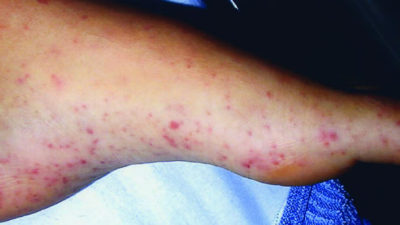
Yes. Some species transmit diseases such as Lyme disease, Rocky Mountain spotted fever, or ehrlichiosis. Early removal and disinfection of bites reduce infection risk.
Maintain a clean yard, trim grass, and remove leaf litter. Natural deterrents like eucalyptus, cedarwood, or rosemary oil can repel ticks but may not stop infestations completely.
They may if the surrounding wildlife or vegetation remains untreated. Santera’s monitoring and follow-up visits ensure full protection from re-infestation.
Ticks are arachnids that attach to feed for days, while fleas are jumping insects that bite repeatedly. Both feed on blood but differ in appearance and behavior.
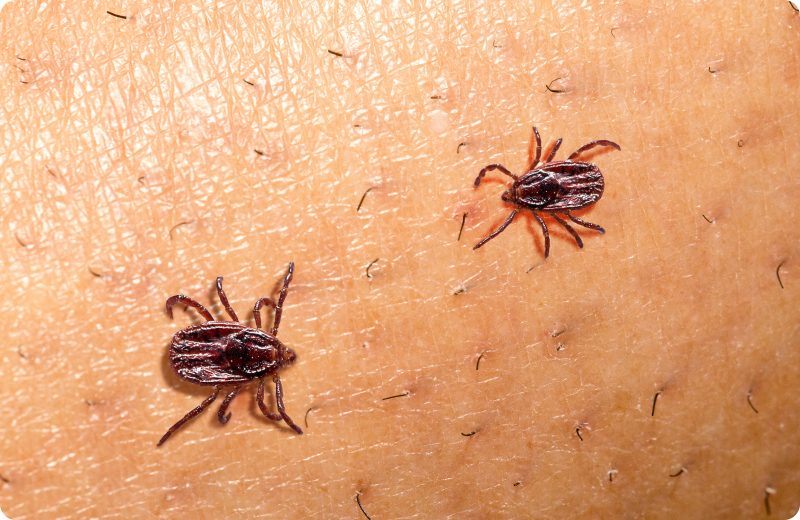
Understanding ticks helps you protect your family, pets, and property from potential health threats.
Ticks feed on the blood of mammals, birds, and reptiles. They attach firmly to their host using barbed mouthparts and feed for several days before detaching.
Ticks do not build nests but lay eggs in shaded outdoor areas such as tall grass, leaf piles, and soil. They rely on passing hosts to continue their lifecycle.
Ticks progress through four stages: egg → larva → nymph → adult. They require a blood meal at each active stage to mature and reproduce.
Ticks thrive in humid, shaded environments and can survive for months without feeding. They become most active during warmer months.
They are patient parasites, waiting on vegetation for a passing host. Once attached, they remain until fully engorged or disturbed.
Visit the santera Pest Library to learn how to identify and control every pests.
Tick bites are usually painless but can cause itching, redness, or rash. Remove ticks carefully with tweezers and disinfect the
They prefer moist, shady environments such as tall grass, shrubs, and wooded trails. Pets and humans can unknowingly bring them