
Protect your pets, family, and home from one of the most common disease-carrying parasites by learning how to identify, manage, and prevent Dog Tick infestations effectively.
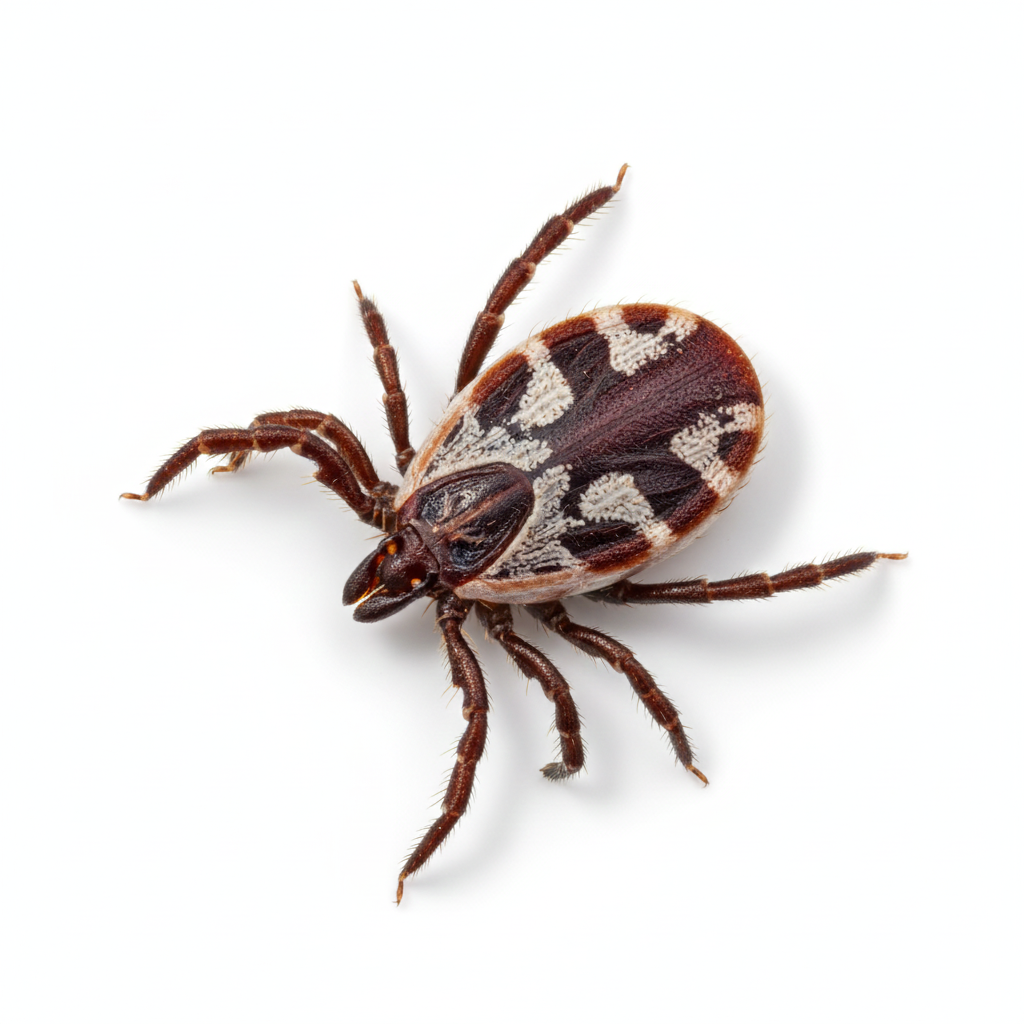
Santera Pros specialize in identifying, treating, and preventing Dog Tick infestations with expert care. These ticks are notorious for spreading harmful pathogens like Rocky Mountain spotted fever and tularemia, making early detection and treatment crucial.
Santera professionals conduct detailed inspections of your property — focusing on grassy, wooded, and pet-accessible areas — and apply targeted, pet-safe treatments to eliminate ticks.
Using the A.I.M. approach — Assess, Implement, Monitor — Santera ensures long-term tick control and continuous protection for both people and pets.
Dog Ticks thrive in grassy fields, forest edges, and areas with thick vegetation. They often attach to dogs, cats, and wildlife but can also bite humans. They’re particularly active during warm, humid months and are widespread across North America.
Yes. While their bites are not immediately painful, they can transmit severe diseases such as Rocky Mountain spotted fever. Prompt removal and professional pest management are essential to avoid health complications.
Adult Dog Ticks are reddish-brown with ornate white or gray markings on their backs. Females swell significantly after feeding, turning grayish and increasing in size up to 1.5 cm.
Dog Ticks are blood-feeding parasites. They feed on mammals, including dogs, livestock, and humans, during different life stages — larvae, nymphs, and adults. They can survive for months without feeding, waiting patiently for a suitable host.
Keep grass short and outdoor areas clean. Check pets and clothing after outdoor activities. Use vet-approved tick preventives and wash pet bedding regularly to stop infestations.
Dog Ticks are outdoor parasites that latch onto passing hosts using a behavior called “questing.” They climb vegetation, extend their front legs, and wait for movement or body heat to detect potential hosts. Once attached, they feed for several days before dropping off to lay eggs.
Female Dog Ticks can lay thousands of eggs after a single feeding. The full life cycle—from egg to adult—can span several months to years, depending on temperature and humidity. Without proper control, populations can quickly expand, increasing the risk of disease transmission.


