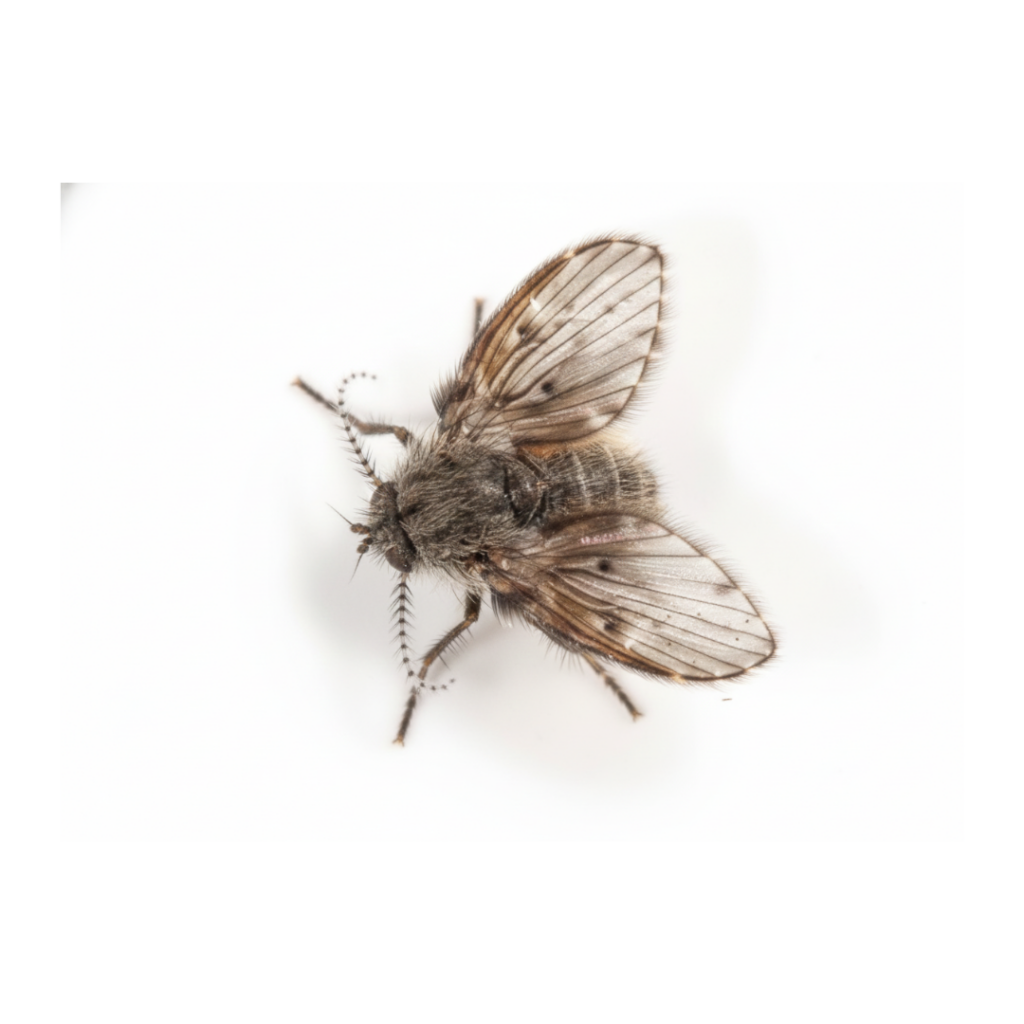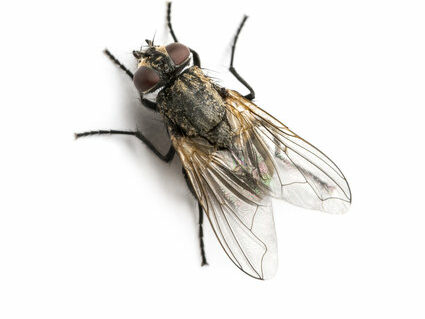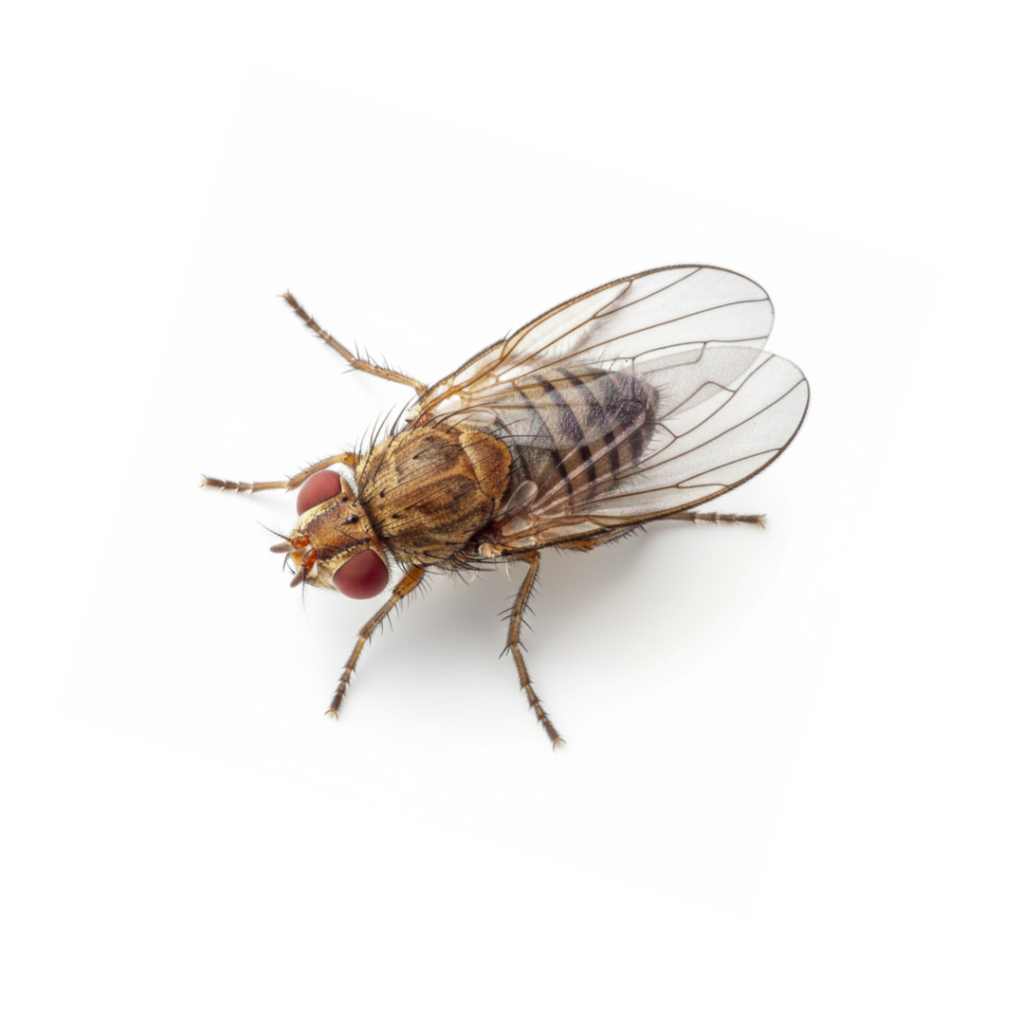
Learn how to identify and prevent fly infestations in homes, businesses, and commercial spaces.
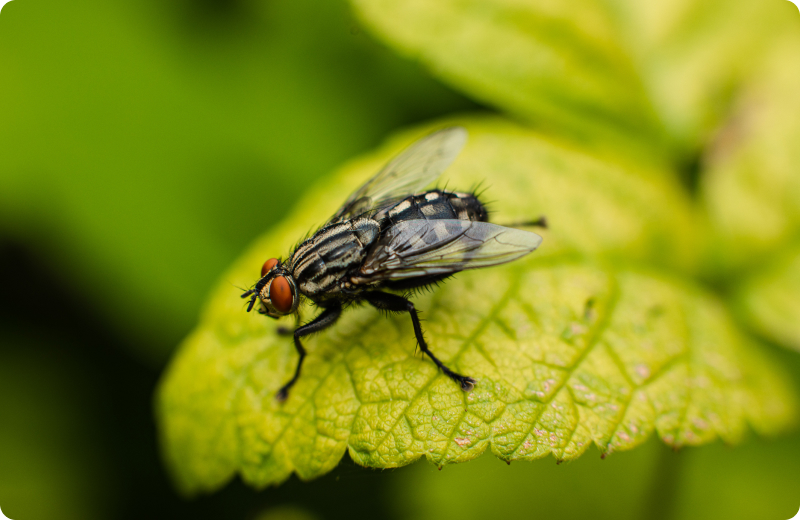
Common flies, including house flies (Musca domestica), are medium-sized insects measuring about 6–8 mm. They usually have grey or black bodies, transparent wings, and large compound eyes. Flies are strong fliers and are often seen resting on walls, ceilings, food surfaces, or near waste areas.
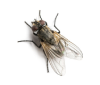
Family: Muscidae / Drosophilidae
Santera identifies fly species and breeding sources such as waste zones, drains, and moisture-prone areas. We apply targeted, safe treatments and implement preventive measures to break the breeding cycle and reduce future infestations.
Flies usually come from breeding sources such as garbage, food waste, drains, animal waste, and moist organic matter. They can enter through open doors, windows, vents, or damaged screens.
Yes. Flies can carry and spread bacteria by landing on waste and then on food and surfaces. This increases the risk of food contamination and can pose health concerns in homes and commercial spaces.

Flies feed on decaying organic matter, food waste, garbage, animal waste, and sugary substances.
Commonly found near trash bins, drains, food preparation areas, animal areas, and damp locations.
Egg → Larva (maggot) → Pupa → Adult. The full cycle can complete in 7–14 days under warm conditions.
Flies multiply rapidly in warm climates and can spread bacteria by contaminating surfaces and food.
Visit the santera Pest Library to learn how to identify and control every pests.
Remove food sources, clean drains, and schedule professional fly treatments with Santera.