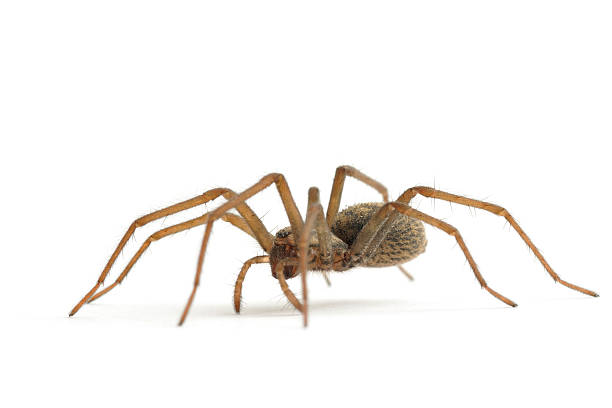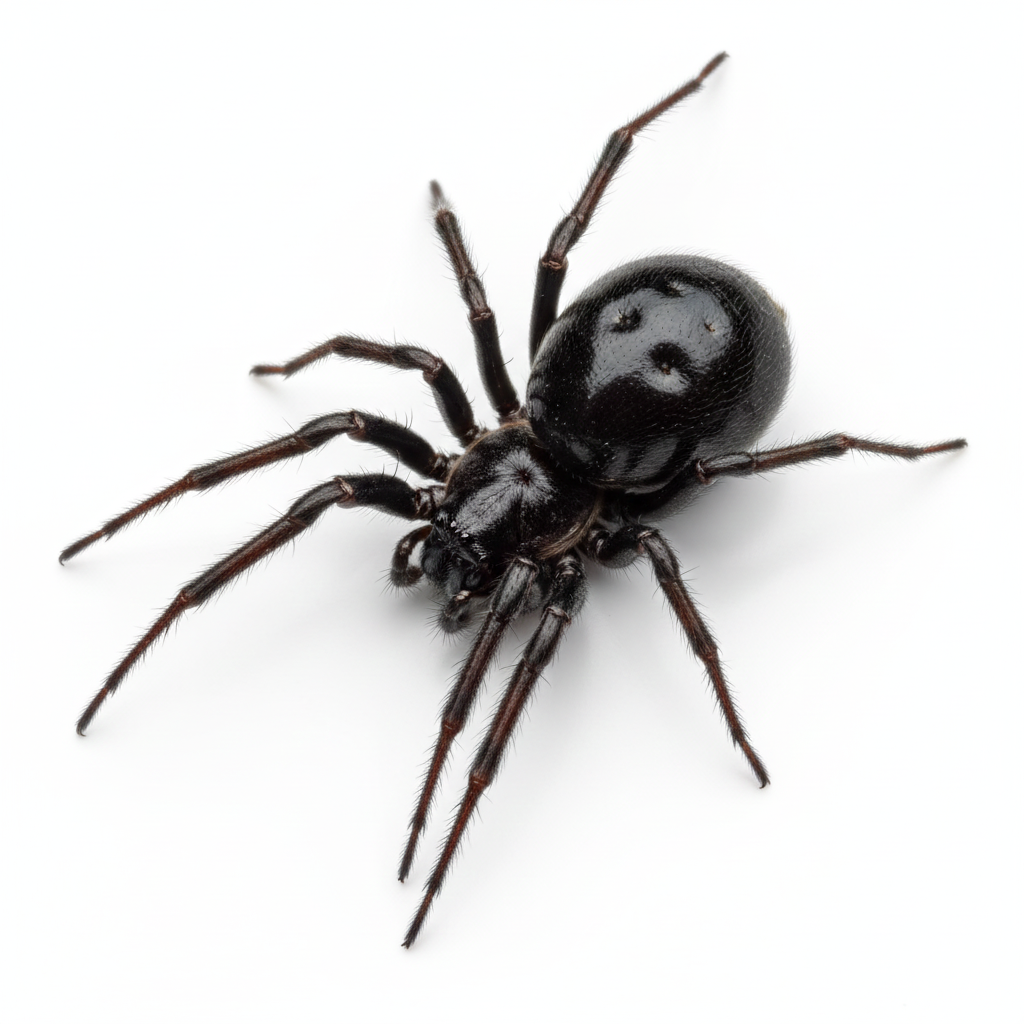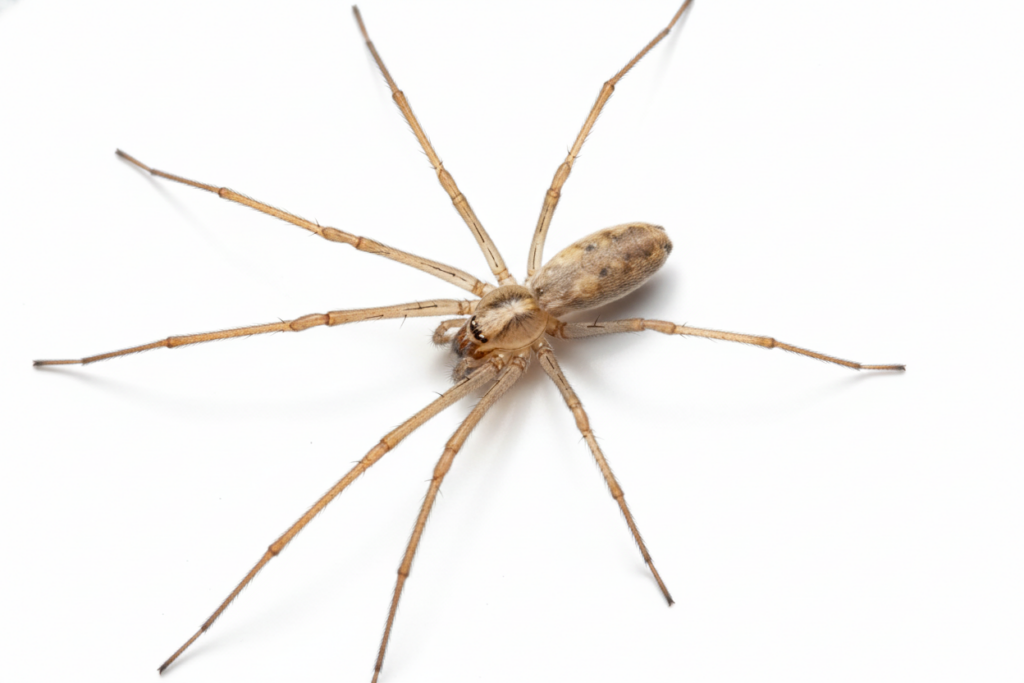
Protect your home or workplace from spiders by understanding how to identify, prevent, and control these eight-legged arachnids effectively.
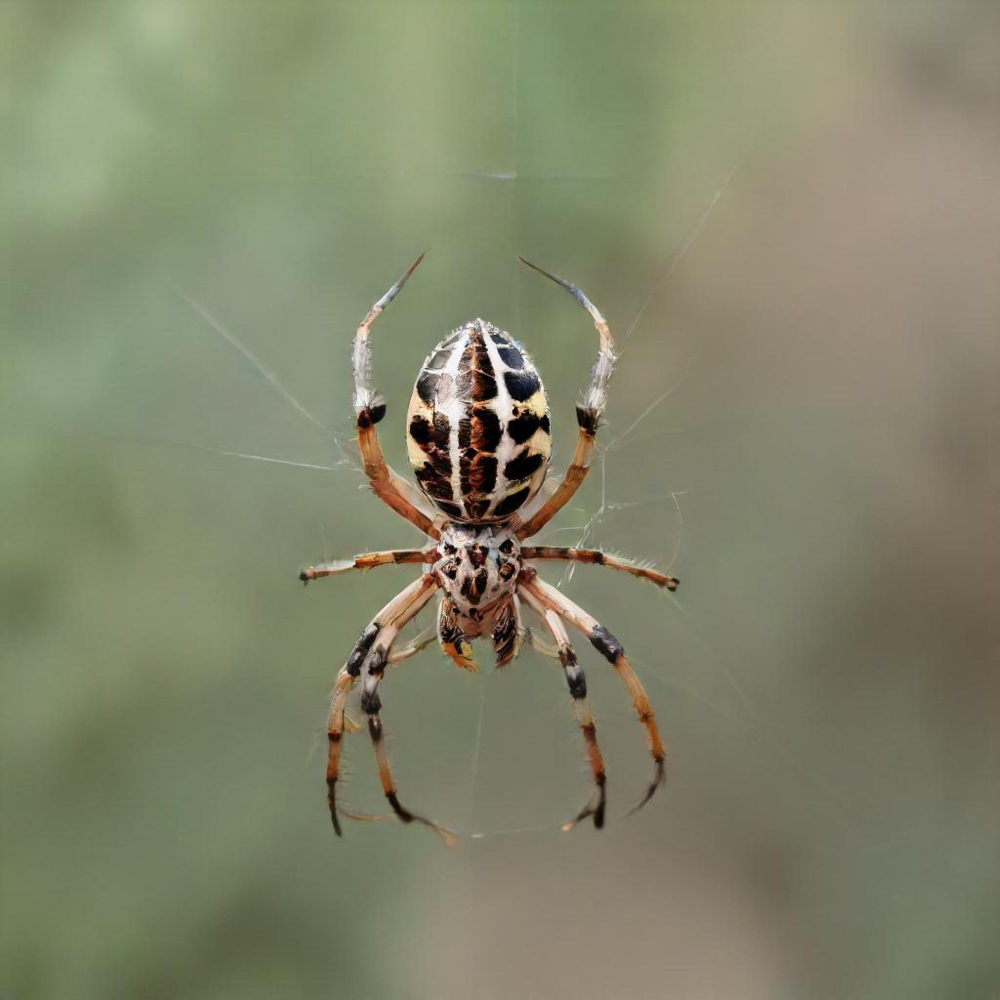
Spiders are arachnids, not insects. They have two main body parts, the cephalothorax and abdomen, and eight legs. Most species vary in size from 3 mm to 25 mm, with colours ranging from brown and black to reddish or grey, depending on the type. Some have distinct markings or patterns on their bodies.
They spin silk webs to trap insects for food or to create safe hiding and egg-laying spots. Indoors, spiders are commonly found in corners of ceilings, basements, storage areas, attics, and window frames where insects are abundant.

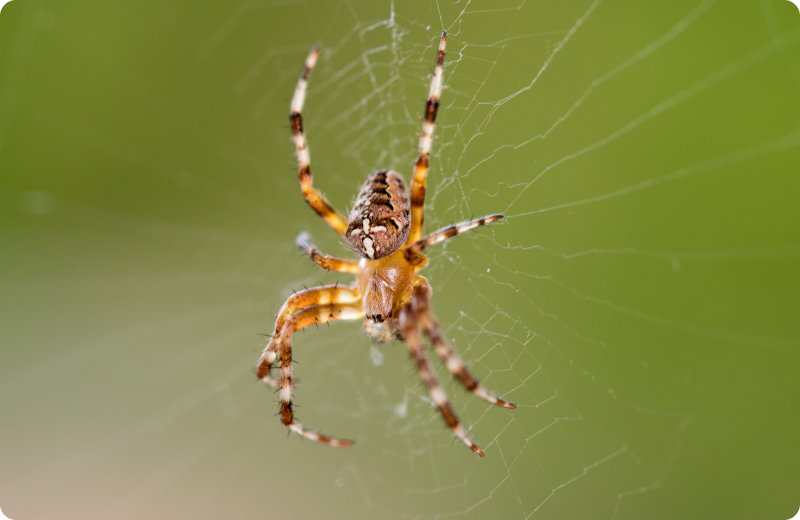
Parasteatoda tepidariorum
Managing spider infestations involves reducing their food sources (insects), removing webs, and blocking entry points. Santera professionals use a targeted A.I.M. approach (Assess, Implement, Monitor) to identify spider species, locate nesting or webbing zones, and apply safe, eco-friendly treatments.
Each property is unique, so Santera tailors its methods to address current infestations and prevent future ones. Routine inspections and ongoing monitoring ensure long-term spider control.
They enter homes in search of insects, warmth, and shelter, especially during seasonal changes or cooler months.
Most spiders are harmless and even beneficial as natural pest controllers. However, a few species, like the black widow or brown recluse, can deliver painful or medically significant bites.
The more you understand spider behaviour, the better you can control them.
Spiders are carnivorous and feed primarily on insects and other small pests. They immobilize prey with venom before consuming it.
They prefer undisturbed areas — behind furniture, in basements, attics, garages, and window corners — especially where insect activity is high.
Egg → Spiderling → Adult. Female spiders can lay hundreds of eggs in silk sacs, ensuring population growth if untreated.
Spiders can survive for weeks without food and often live longer indoors where temperatures and food supply are stable.
Visit the santera Pest Library to learn how to identify and control every pests.
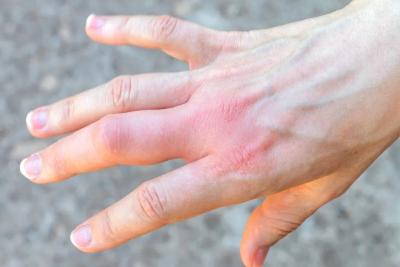
Most spider bites are harmless and cause only minor irritation. However, bites from venomous species can cause pain, swelling, or
Common web locations include ceiling corners, windows, door frames, and storage areas. Regularly removing webs discourages reinfestation and reveals active