
Protect your home or business from house spiders by understanding how to identify, prevent, and manage these common web-building pests.
Santera specialists are adept at effectively locating, removing, and preventing spider infestations. Utilizing Santera’s A.I.M. approach, Assess, Implement, Monitor—our experts thoroughly examine affected zones, administer safe, precise treatments, and set up safeguards to curtail spider presence. Santera secures a cleaner, safer space for you, whether it’s your home or business, by clearing webs, treating secluded areas, and sealing potential entry points.
House spiders are typically found indoors, in basements, attics, ceiling corners, behind furniture, and in undisturbed areas. They prefer quiet spaces where they can spin webs to catch insects.
Most house spiders are harmless to humans. While they can bite if provoked, their venom is not medically significant. In fact, they help control other household pests, such as flies, mosquitoes, and ants.
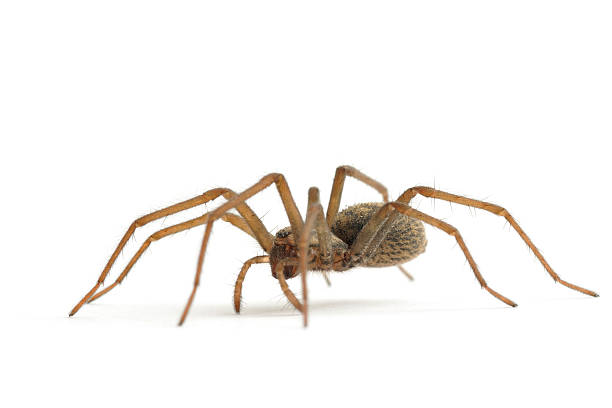
Adult house spiders are small to medium-sized, with females measuring about 5–8 mm in body length and males slightly smaller. They have a rounded abdomen that is usually brown or grey with lighter markings. Their long, slender legs and irregular web patterns make them easily recognizable.
House spiders primarily feed on flying insects such as flies, mosquitoes, and small moths that become trapped in their webs. They play a beneficial role in natural pest control indoors.
Keep your home clean and clutter-free, especially in corners and under furniture. Regularly vacuum webs and seal cracks or gaps around windows and doors to prevent entry. Reducing insect populations also limits the spider’s food source, discouraging them from staying.
House spiders are generally non-aggressive and spend most of their time in webs waiting for prey. Females are more sedentary, maintaining their webs long-term, while males often wander in search of mates. They thrive in areas with a steady supply of insects.
Female house spiders produce multiple egg sacs throughout their lifespan, each containing hundreds of eggs. The spiderlings hatch and may remain near the web before dispersing. Under suitable indoor conditions, populations can grow steadily over time


