Protect your home, furniture, or business from termites by learning how to identify, prevent, and control these silent wood destroyers before they cause serious damage.
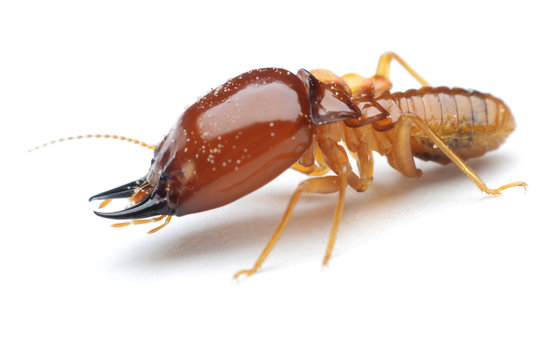
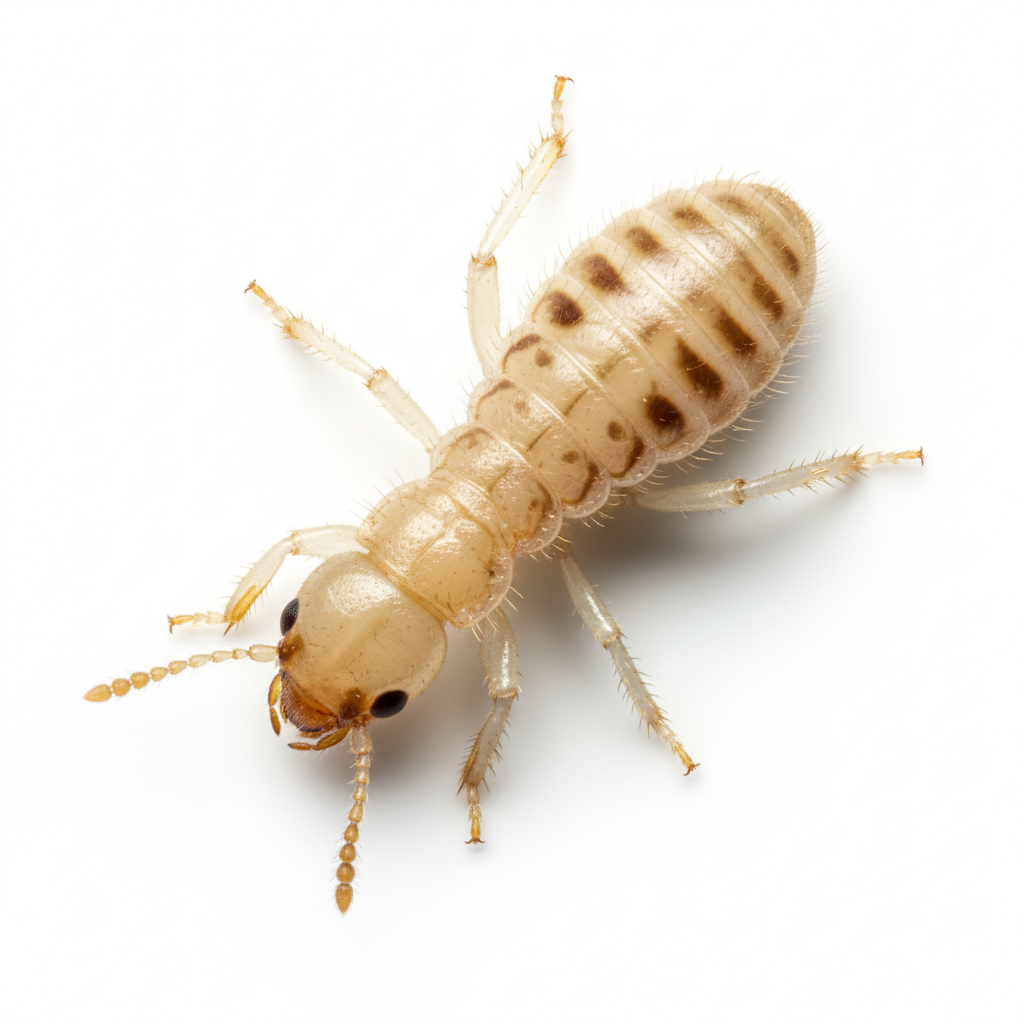
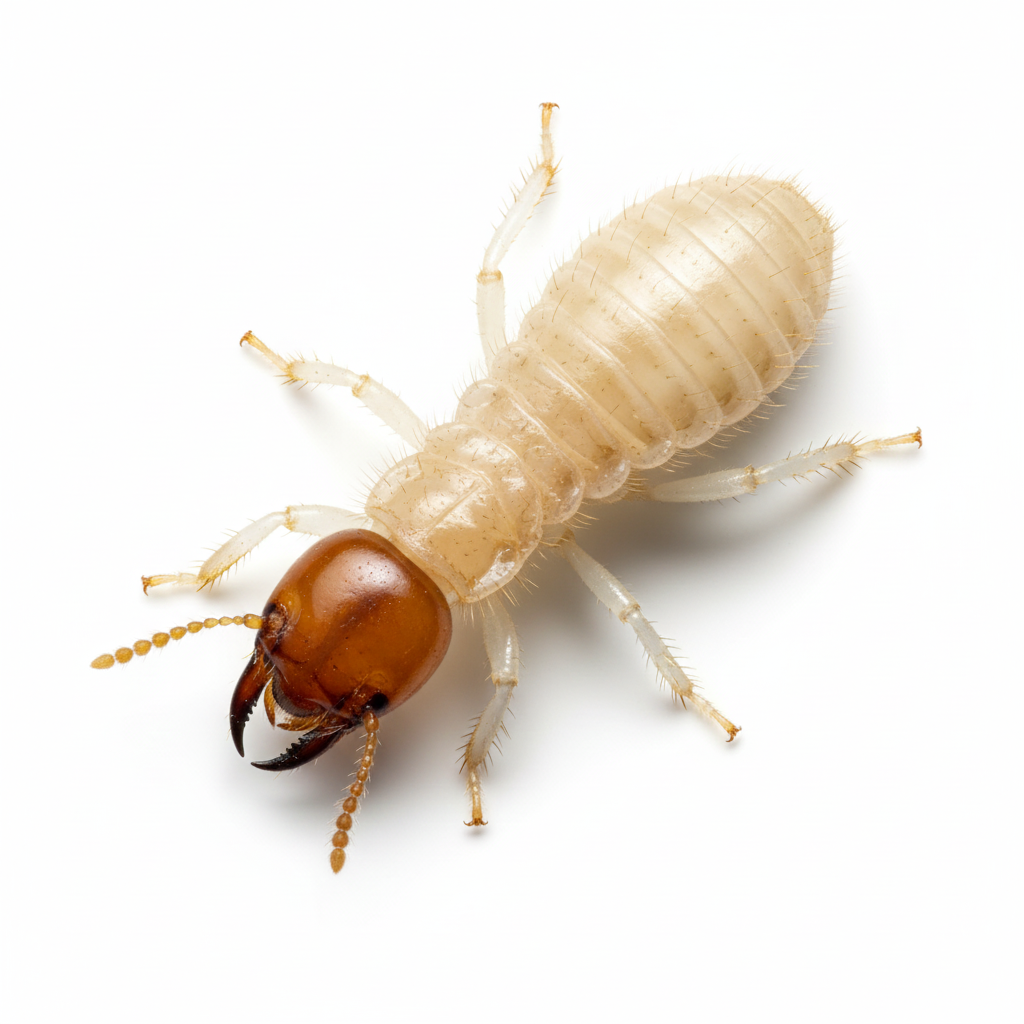
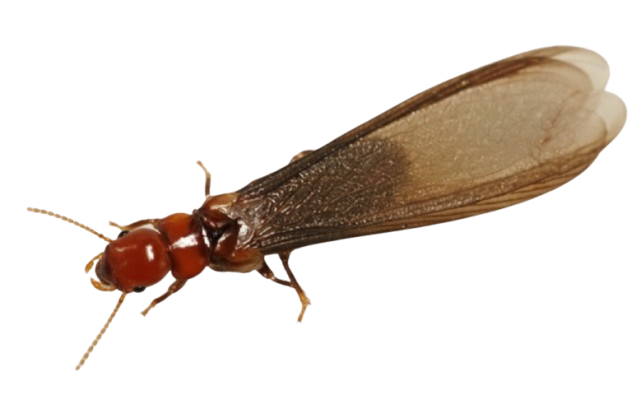
Termites are soft-bodied, pale insects that live in large colonies and feed primarily on cellulose found in wood, paper, and plant material. They are often mistaken for ants but have straight antennae, uniform waists, and equal-sized wings. Worker termites are creamy white, while swarmers (reproductive termites) are dark brown or black with transparent wings.
Family: Rhinotermitidae / Kalotermitidae
How Santera Helps Get Rid of Termites
Eliminating termites requires specialized inspection, targeted treatment, and long-term prevention.
Trust Santera professionals to eliminate your termite problem using our advanced A.I.M. (Assess, Implement, Monitor) system. Experts begin by identifying the specific termite species and locating the entire colony. They then deploy cutting-edge liquid and baiting methods to ensure total eradication. This results in a comprehensive, customized management plan that both removes termites now and protects your structure long-term.
They are attracted to moisture, wood, and warmth. Cracks in foundations, leaky pipes, or damp wooden structures make ideal entry points.
Termites do not bite humans; they feed exclusively on wood and plant matter. The damage they cause is structural, not physical.
Reduce moisture levels, fix leaks, and avoid wood-to-soil contact. Applying natural repellents like orange oil or neem oil can help deter activity but may not eliminate colonies.
Yes, if the root colony remains active or if untreated areas exist. Santera’s ongoing monitoring ensures complete colony elimination and long-term prevention.
Termites have straight antennae, broad waists, and equal-sized wings, while ants have elbowed antennae, narrow waists, and uneven wings.
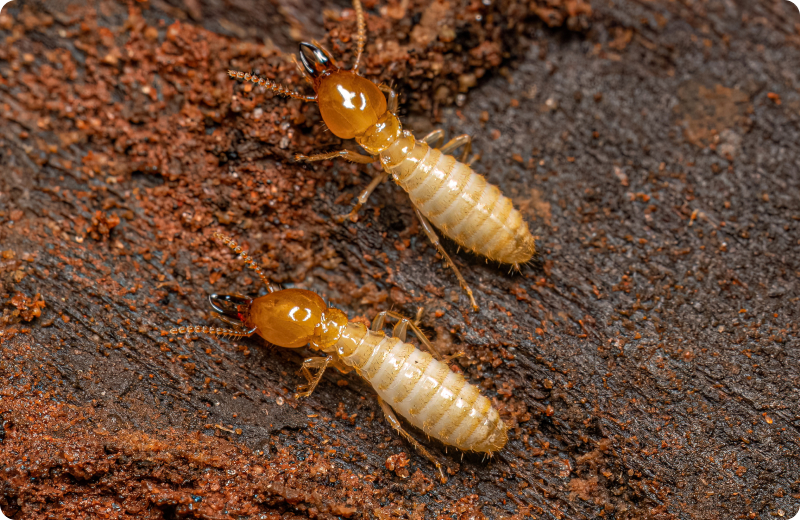
The more you understand termites, the easier it is to detect early warning signs and protect your property.
Termites feed on cellulose found in wood, paper, and cardboard, silently damaging structural beams, furniture, and flooring.
Termites live in highly organized colonies that help them survive and expand rapidly. They rely on constant moisture and cooperative behavior to thrive in hidden environments.
The termite lifecycle includes egg, nymph, and adult stages within a caste-based colony. Depending on the species, workers, soldiers, and reproductives develop to support colony growth.
Visit the santera Pest Library to learn how to identify and control every pests.
Termites weaken wood from the inside out, leaving hollow sounds when tapped and causing paint to bubble or wood to
The termite lifecycle consists of egg, nymph, and adult stages within a structured colony. Colonies include workers, soldiers, and reproductive