
Protect your property from moisture-loving dampwood termites by understanding how to identify, control, and prevent infestations before they damage wooden structures
Santera professionals specialize in locating dampwood termite colonies that thrive in wood with high moisture content. These termites don’t need soil contact but depend on damp or decaying timber. Using Santera’s A.I.M. process, the experts identify moisture sources, treat infested areas with targeted solutions, and create preventive barriers to stop future infestations. Santera also provides moisture correction strategies to make your home less appealing to these pests.
They are found in areas with constant humidity, such as coastal, forested, or water-adjacent regions. Indoors, they infest wooden structures exposed to leaks, poor ventilation, or plumbing issues.
They do not bite or sting, but can severely damage structural wood by hollowing it out from within. Their activity weakens foundations, furniture, and wooden frames if left unchecked.
Unlike drywood or subterranean termites, dampwood termites require high moisture levels. They infest wet wood directly, creating large, smooth tunnels without soil contact.
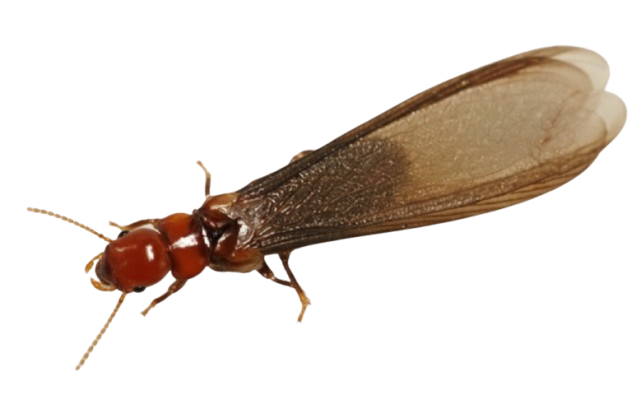
Dampwood termites are larger than most other termite species. They have a reddish-brown to dark tan body, with long, pale wings and a heavy build. Their soldiers possess large mandibles used for defense.
They feed on decaying or moist wood, thriving where water damage or leaks occur. Their diet consists mainly of cellulose found in water-soaked logs, wooden beams, and fallen trees.
Repair leaky pipes, roofs, and gutters promptly. Ensure proper ventilation in crawl spaces and basements, and store firewood away from the house. Keeping wooden structures dry is the most effective preventive step.
Dampwood termites prefer dark, damp conditions. They are not typically found in dry homes but can move indoors if moisture problems persist. Colonies develop slowly but can grow large in ideal conditions.
Winged reproductives swarm during humid evenings to establish new colonies in damp wood. Once settled, they shed their wings and start laying eggs. Colonies may survive for several years, gradually expanding through connected wooden areas.


