
Protect your home or garden from ring-legged earwigs by learning how to identify, prevent, and control this soil-dwelling species.
How Santera Helps Get Rid of Ring-Legged Earwigs
Santera experts locate and treat outdoor breeding zones, applying safe and effective insecticides to eliminate earwigs from soil and garden areas. Moisture control and exclusion methods prevent re-infestation.
Common in gardens, flowerbeds, and compost piles.
No. This species is wingless and crawls to move.
No. They’re harmless and rarely enter homes.
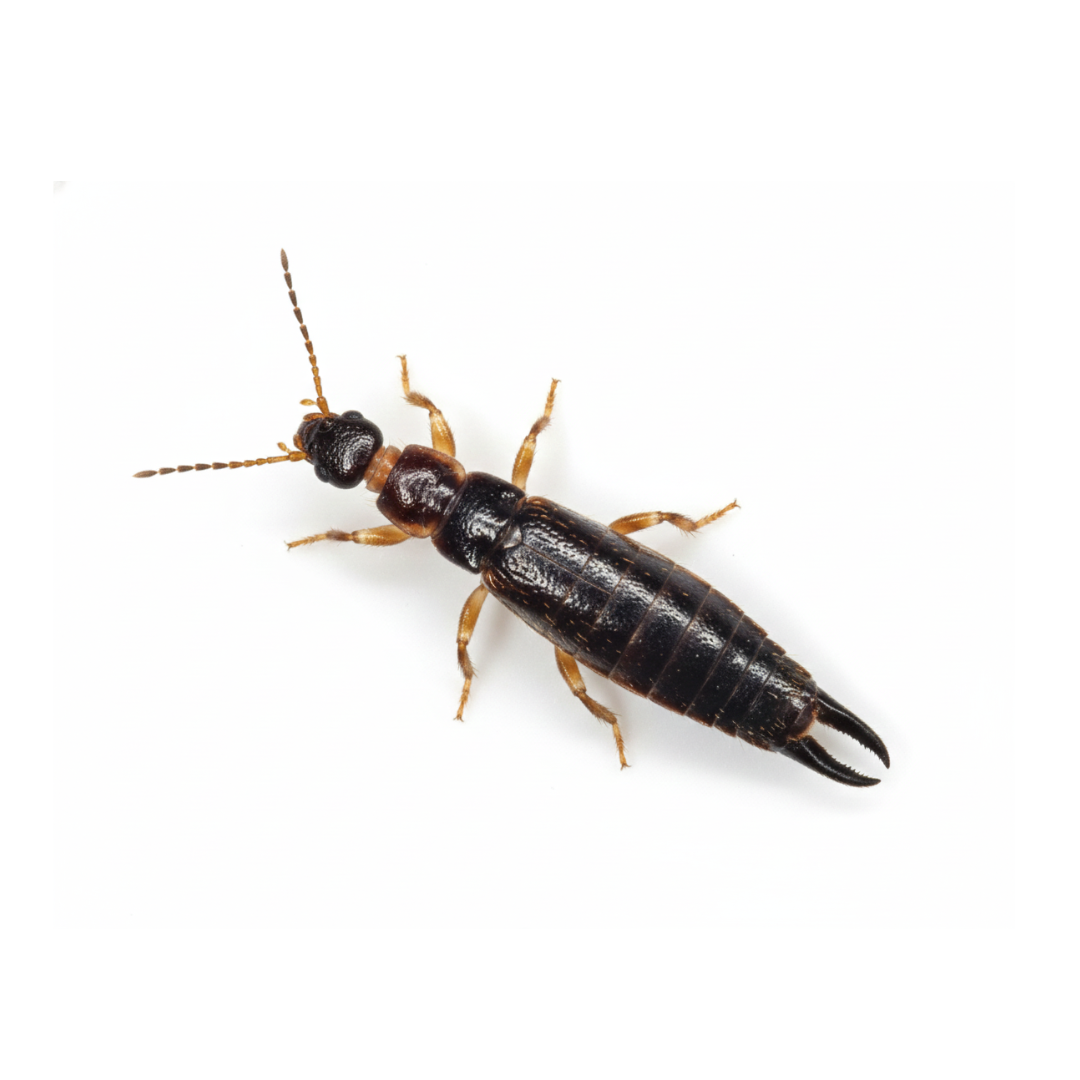
Ring-legged earwigs are slender, medium-sized insects typically dark brown to black in color, with distinctive pale or yellowish bands on their legs that give the species its name. They have elongated, flattened bodies, long antennae, and prominent forceps-like pincers at the end of the abdomen. Adults generally measure about 12–18 mm in length, with males having more curved pincers than females.
They are omnivorous and feed on a wide range of materials, including decaying plant matter, fungi, algae, small insects, and other organic debris. Ring-legged earwigs may also feed on tender plant tissues and garden vegetation when populations are high.
To reduce ring-legged earwig activity, manage moisture around structures by improving drainage and fixing leaks. Remove leaf litter, mulch, and organic debris near foundations, seal cracks and gaps in walls and entry points, and limit excessive outdoor lighting that can attract insects they prey on.
Ring-legged earwigs prefer moist, shaded environments and are primarily nocturnal. During daylight hours, they hide under stones, logs, mulch, and other sheltered areas. They may occasionally enter homes, especially during warm or humid conditions, but are not aggressive and rarely interact with people.
Females lay eggs in moist, protected soil or crevices and display maternal care by guarding and cleaning the eggs. After hatching, the nymphs remain with the female for a short period before developing independently, gradually maturing through several molts into adults.


