
Protect your home or business from cicada killer wasps by learning identification and control techniques.
Santera Pros are trained to manage wasp infestations, including cicada killer wasps and other stinging insects. Since every property and landscape is different, your Santera Pro will design a custom wasp treatment plan to suit your situation.
Keeping wasps out of your home and yard is an ongoing process, not a one-time solution. Santera’s exclusive A.I.M. solution provides continuous protection by identifying nesting areas, applying safe control treatments, and monitoring activity levels. Santera can deliver the right solution to keep wasps in their place, out of your home or business.
Cicada killer wasps don’t damage buildings or wood like termites or carpenter bees. However, they can dig noticeable burrows in lawns, gardens, and around walkways. Their nesting activity may loosen soil or create unsightly mounds, especially if several females nest in the same area. While their digging is mostly harmless, it can disrupt the appearance of maintained lawns.
If you notice multiple burrows, increased wasp activity, or feel unsafe using outdoor spaces, it’s time to call a pest control expert. A professional can safely locate and treat burrows, prevent re-nesting, and advise on lawn care practices that make the area less attractive to wasps. Professional help is especially recommended in areas with children, pets, or heavy outdoor use.
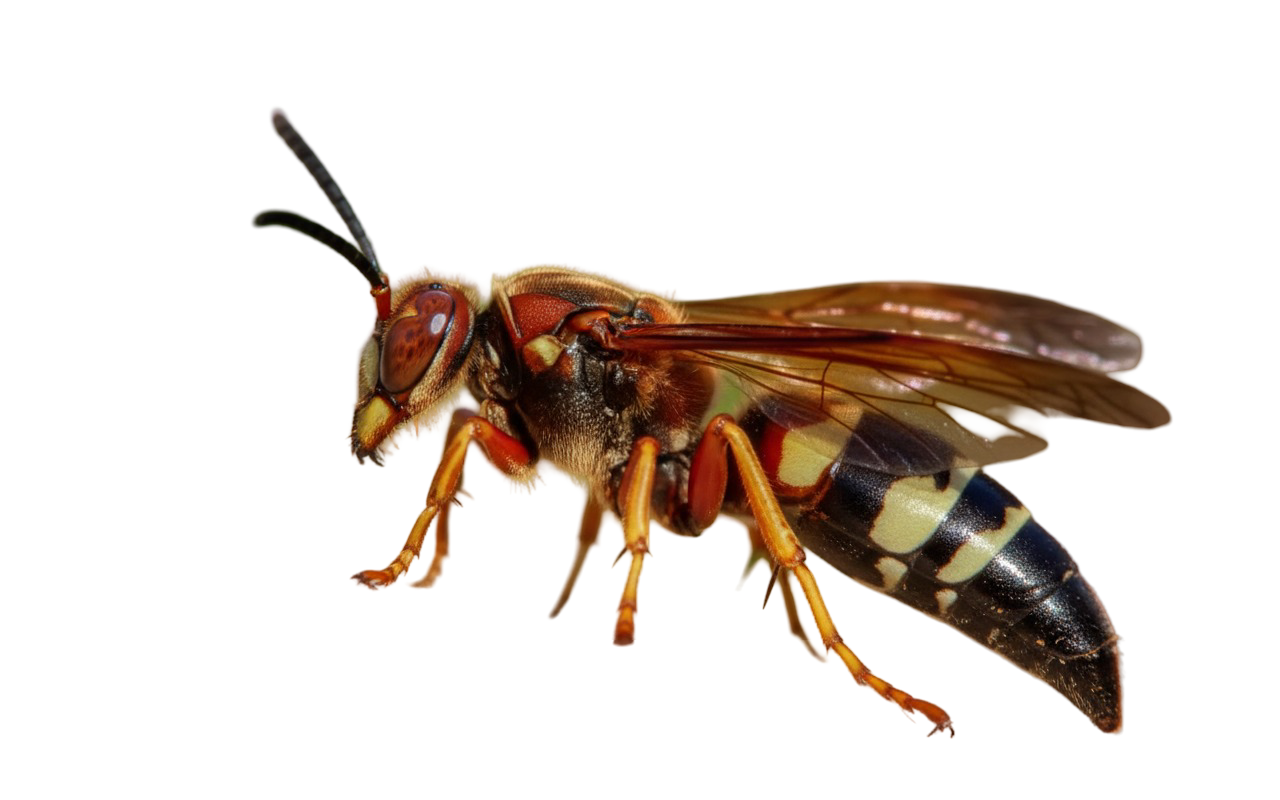
Cicada killer wasps are large, solitary wasps measuring about 1.5 to 2 inches in length. They have black bodies with yellow markings on the abdomen, reddish-brown wings, and rusty-colored legs. Their size and buzzing sound often cause alarm, though they are generally non-aggressive.
Keep lawns healthy and avoid bare patches where wasps can dig burrows. Water dry soil regularly to discourage nesting. You can also seal cracks and gaps near patios or driveways. Avoid leaving food or sugary drinks uncovered outdoors. If you notice burrow holes, avoid disturbing them and contact a professional.
Female cicada killer wasps dig burrows in dry, sandy soil to create underground chambers. They capture cicadas, paralyze them, and place them in the burrows as food for their larvae. Each burrow can hold several paralyzed cicadas and developing wasp larvae.
Adult females feed on nectar but hunt cicadas to provide nourishment for their offspring. Males do not hunt but feed solely on plant nectar.
Cicada killer wasps are solitary and active during the summer months. Males are territorial and may hover around nesting areas, but they cannot sting. Females can sting, but rarely do unless provoked. They play an important ecological role by controlling cicada populations.


