
Norway rats are highly adaptable, destructive rodents that thrive in residential, commercial, and industrial environments. Santera’s proven approach to Norway rat elimination combines precision, prevention, and long-term control.
We start with a thorough inspection and risk assessment to identify infestation hotspots, entry points, and environmental factors attracting rodents. Based on these insights, our team implements a strategic rodent control program using professional-grade baiting, trapping, and monitoring methods that are safe and effective. We seal structural gaps, cracks, and access points rats use to enter properties. Santera also provides expert guidance on sanitation and habitat reduction, addressing food sources and nesting conditions. Santera handles everything, ensuring you get both fast relief and lasting results.
Norway rats prefer to burrow near foundations, sewers, and garbage areas. Indoors, they often settle in basements, crawl spaces, or lower floors close to food and water sources.
Norway rats are larger and more robust with shorter tails and smaller ears, while roof rats are slimmer, longer-tailed, and better climbers. Norway rats are ground-dwellers and prefer lower levels, whereas roof rats are more likely to nest in attics or trees.
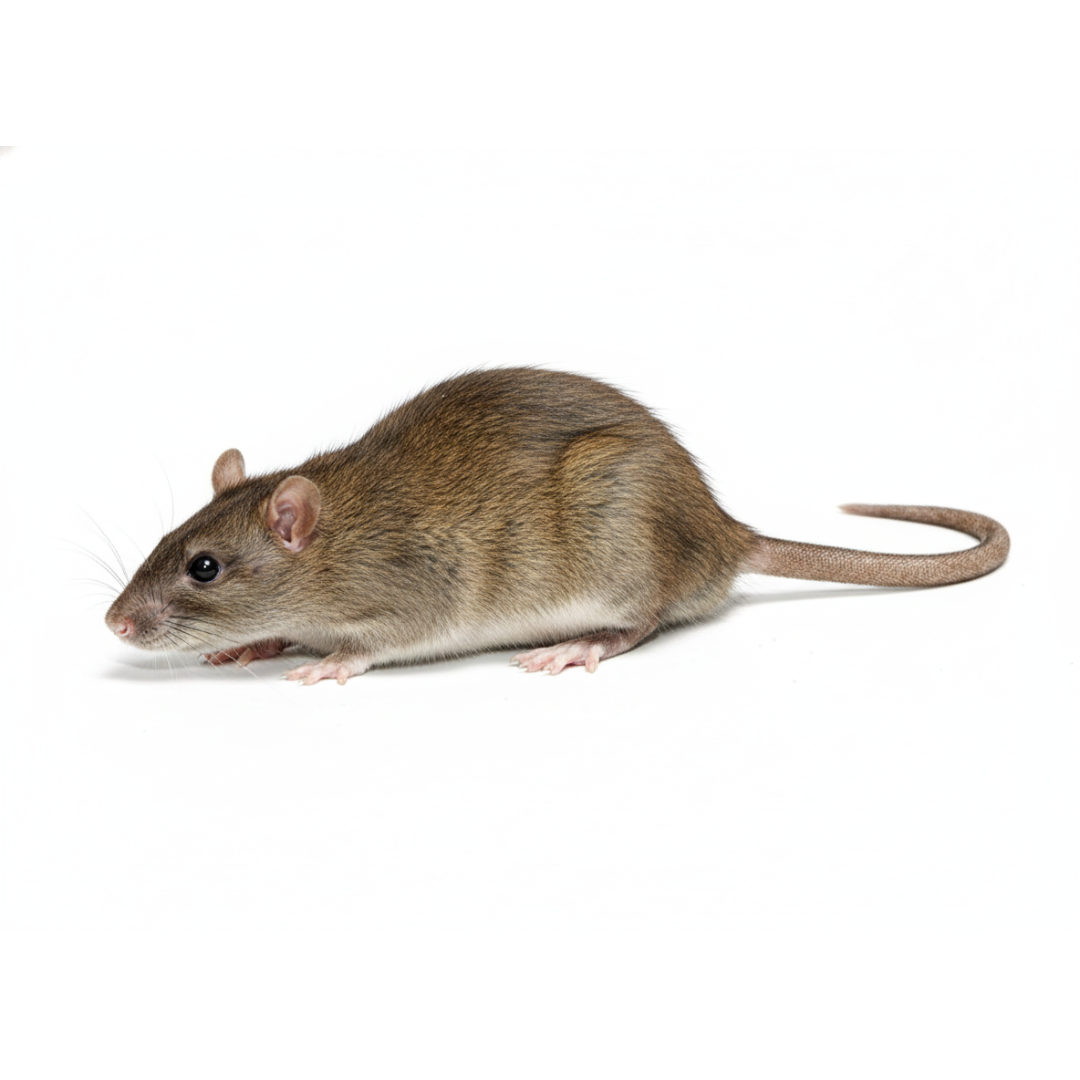
Norway rats are the largest common commensal rodents, measuring 20–25 cm in body length, with a thick body, blunt nose, small ears, and a tail shorter than the head and body combined. They typically have coarse brown or gray fur on their back with a lighter gray or whitish underside.
Norway rats are omnivorous and will eat almost anything available — grains, meat scraps, pet food, and garbage. They prefer high-protein and carbohydrate-rich foods and typically require a consistent water source.
Seal all openings larger than 12 mm, especially around foundations and utility pipes. Store food and pet feed in secure containers, keep trash tightly covered, and remove debris and clutter that provide nesting spots. Maintaining clean surroundings is key to discouraging rats.
Norway rats are primarily nocturnal and tend to live in colonies. They burrow into the ground to create extensive tunnel systems and are cautious of new objects or traps in their environment. They can gnaw through wood, plastic, and even soft metals.
A female Norway rat can produce up to 6–12 pups per litter and may have 4–6 litters each year. Under ideal conditions, a single pair can lead to hundreds of offspring annually, making quick intervention crucial to stop population growth.


