
Protect your home or business from common house centipedes by learning how to identify, prevent, and control these fast-moving, moisture-loving arthropods.
What Santera Does !
At Santera, we understand the unique behaviour of house centipedes and tailor our services accordingly. We locate how centipedes are entering your property, such as cracks, gaps, or plumbing penetrations, and identify moist areas favourable to them. We help you reduce the “inviting” conditions that attract centipedes by tackling leaks, improving ventilation, dehumidifying basements/bathrooms, and removing leaf litter near foundations.
They are drawn to moisture and dark, secluded locations. If your property has damp spaces, leaks, clutter, or cracks, it becomes inviting. They may follow other insects inside since they prey on them.
Generally, no. They are not aggressive. While they do have venomous claws (forcipules) to subdue prey, their jaws are weak and unlikely to penetrate human skin. Bites are rare and usually cause only minor pain or swelling.
Yes. By addressing key factors—such as reducing humidity, repairing leaks, sealing cracks, removing clutter and debris, and controlling other insect populations that serve as a food source—the risk can be significantly reduced. However, in cases of persistent or high-level activity, professional intervention, such as services provided by Santera, is recommended for effective and long-term control.
You keep seeing them because the root conditions (moisture, other insects, hiding spots, entry points) may not have been fully addressed. Also, eliminating one may only reveal more if the environment remains inviting. Regular follow-up and preventive steps are key.
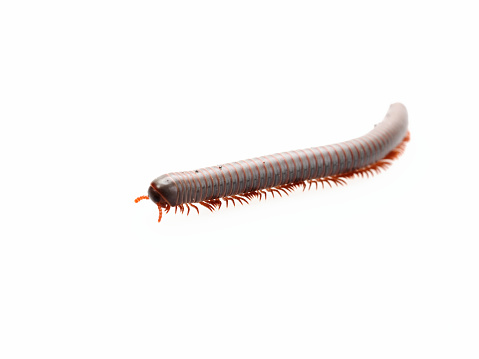
Common house centipedes are slender, fast-moving arthropods with elongated, flattened bodies and very long, delicate legs. They are typically yellowish-gray to light brown with darker stripes along the body and can grow up to 2.5–4 cm in length, not including their legs and antennae.
They are beneficial predators that feed on other household pests, including flies, cockroaches, ants, spiders, and silverfish. By preying on these insects, house centipedes help reduce indoor pest populations.
To limit their presence indoors, reduce moisture by fixing leaks and improving ventilation, especially in bathrooms, basements, and kitchens. Seal cracks and gaps around doors, windows, and foundations, remove clutter, and manage other insect populations that attract them.
Common house centipedes are nocturnal and prefer dark, damp environments. They hide during the day in wall voids, basements, closets, and under sinks, emerging at night to hunt. Although their appearance can be alarming, they are generally non-aggressive and avoid human contact.
Females lay eggs in moist, protected locations such as soil, leaf litter, or crevices. The young hatch with fewer legs and gradually develop more as they mature. Under favorable conditions, house centipedes can live for several years.


