
Yellowjacket Wasps (Vespula spp.) are aggressive, black-and-yellow stinging insects that live in large colonies, build paper nests, and can sting multiple times when threatened.
Santera Pros are expertly trained to manage Yellowjacket Wasps and other stinging pests. Since every property and infestation is unique, your Santera Pro will create a customized wasp control and prevention plan tailored to your specific situation. Eliminating and preventing wasps is an ongoing process—not just a single treatment. Santera’s exclusive A.I.M. approach — Assess, Implement, and Monitor — ensures continuous protection by locating nests, applying targeted treatments, and monitoring activity to prevent re-infestation. With Santera, you can keep Yellowjacket Wasps where they belong — outside your home or business.
While Yellowjacket Wasps don’t typically cause structural damage, they often build nests inside walls, attics, or underground, which can lead to property issues if left untreated. Their aggressive nature also poses a stinging threat to people and pets, making prompt removal essential.
You should contact a pest control expert immediately if you spot frequent wasp activity around your property or locate a nest near entry points, gardens, or outdoor areas. Attempting to remove a nest on your own can be dangerous—professional intervention ensures safe and effective elimination of Yellowjacket Wasps.
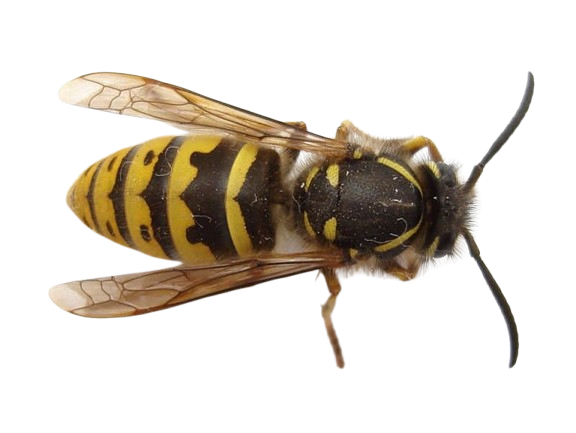
Yellowjacket Wasps (Vespula spp.) are easily recognized by their bright yellow and black banded bodies, narrow waists, and smooth, shiny exoskeletons. Measuring about 10–16 mm in length, they have elongated wings that fold lengthwise when at rest. Unlike bees, Yellowjackets have smooth stingers that allow them to sting multiple times without dying.
Yellowjackets are omnivorous scavengers, feeding on a variety of sugary substances like nectar, fruits, and soft drinks, as well as proteins such as insects, meat, and fish. This makes them both beneficial for controlling other pests and a nuisance around outdoor dining areas and garbage bins.
Yellowjackets are social insects that live in colonies containing thousands of workers. They are highly territorial and will aggressively defend their nests if disturbed. Nests are often built underground, in wall voids, attics, or tree hollows, and are made from paper-like material created by chewing wood fibers mixed with saliva. Their activity peaks in late summer and early fall, when food sources become scarce.
Each spring, fertilized queens emerge from hibernation to start new colonies. The queen lays eggs that develop into worker wasps, which expand the nest and care for future larvae. By late summer, male and new queen wasps are produced, and after mating, the males die while the fertilized queens seek a safe and protected place to overwinter.
Keep food and drinks covered outdoors, seal trash bins tightly, and remove fallen fruits or sugary residues around your property. Regularly inspect eaves, attics, and wall voids for early nest formation. If a nest is found, do not attempt removal yourself. Contact a professional pest control service like Santera for efficient removal of these wasps.


