
Protect your home, yard, and pets from deer ticks — one of the most common disease-carrying parasites in North America — by learning how to identify, prevent, and manage them effectively.
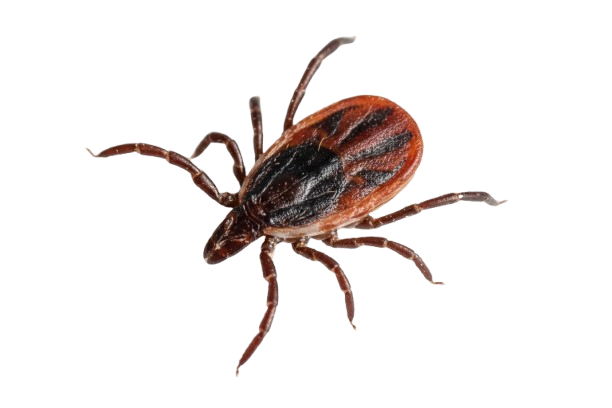
Santera Pros specialize in detecting and controlling deer tick infestations through targeted, eco-conscious treatments. These ticks are known carriers of Lyme disease and thrive in shaded, humid outdoor environments.
Santera professionals inspect vegetation, pet zones, and outdoor spaces to identify tick hotspots. They then apply safe, long-lasting treatments and establish preventive barriers to stop future infestations.
Through Santera’s A.I.M. approach — Assess, Implement, Monitor, experts ensure precise tick control, continuous protection, and peace of mind for your family and pets.
Deer ticks are most prevalent in wooded, grassy, and moist environments across North America, particularly in the Northeastern and Upper Midwestern regions. They often cling to tall grass or leaves, waiting to latch onto passing animals or humans.
Yes. Deer ticks are known vectors of Lyme disease, anaplasmosis, and babesiosis. Their bites may go unnoticed, but early removal is crucial to prevent disease transmission.
Deer ticks are small, flat-bodied arachnids with reddish-brown bodies and dark legs. Adult females are about 3 mm long (unfed) but swell to the size of a small pea after feeding.
They feed exclusively on blood from mammals, birds, and reptiles. Deer, rodents, and pets are common hosts, and they can transmit pathogens while feeding.
Keep grass trimmed short, clear away leaf litter, and create a gravel or mulch barrier between lawns and wooded areas. Treat pets with veterinarian-approved tick preventives, and wear protective clothing when outdoors.
Deer ticks are patient parasites that detect hosts through body heat and vibrations. They latch onto passing animals or humans and can remain attached for several days.
Females lay thousands of eggs in spring, which hatch into larvae that seek their first blood meal. The full life cycle — egg, larva, nymph, adult — takes about two years, depending on environmental conditions.


