
Safeguard your home or business from destructive drywood termites by learning how to recognize, prevent, and manage infestations before they cause costly damage
Santera Pros are trained to locate drywood termite colonies hidden deep within furniture, walls, or wooden structures. Unlike subterranean species, these termites live entirely inside dry wood without needing soil contact. Our experts use the A.I.M. (Assess, Implement, Monitor) system. This allows them to perform precise inspections, deliver targeted (localized) or whole-structure treatments, and create long-term protection plans to prevent future infestations.
They thrive in warm, coastal, and tropical climates. Common hiding spots include wooden beams, floors, doors, furniture, and window frames — anywhere with dry, seasoned wood.
They don’t bite or sting, but they silently weaken wooden structures, causing significant property damage over time if left undetected.
Drywood termites live entirely in dry wood and do not require moisture or contact with the soil. They create smooth galleries within wood and push out tiny, pellet-like droppings through small holes.
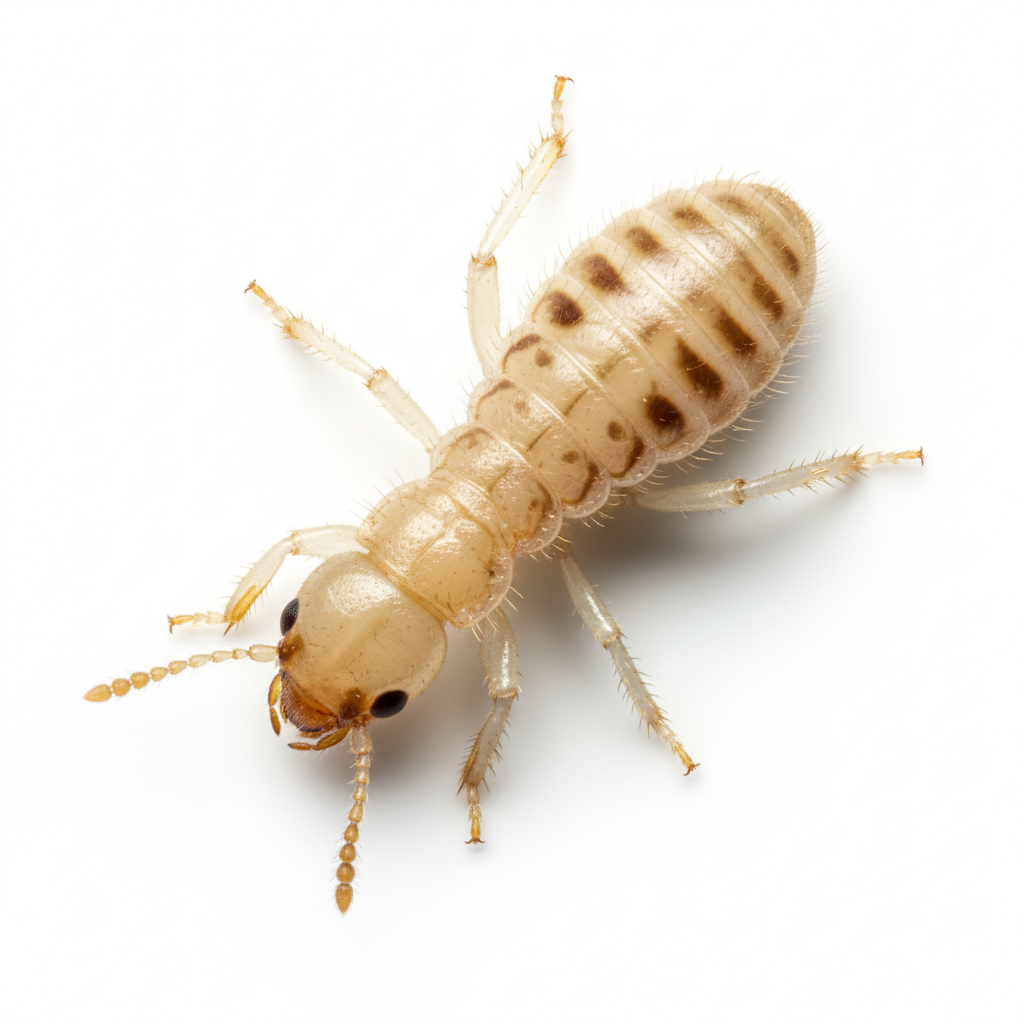
Drywood termites are small, cream to light brown insects. Winged swarmers are about 10–12 mm long, with long, transparent wings of equal size. Soldiers have strong mandibles but smaller heads than subterranean species.
They feed on dry cellulose material found in wood and wooden furniture. By consuming the interior, they leave only a thin shell, making detection difficult until visible damage appears.
Keep wooden areas painted, sealed, and dry. Avoid storing wooden furniture or firewood near walls, and inspect regularly for frass (termite droppings) or hollow-sounding wood. Professional fumigation or localized treatment is best for active infestations.
Drywood termites live entirely inside their food source. Colonies are smaller than subterranean ones but can persist for years undetected. They often spread through infested wooden items or furniture moved between locations.
After swarming, reproductive termites shed their wings and form new colonies inside cracks or joints in dry wood. A queen can live for many years, continuously producing new workers and soldiers.


