
Protect your home or business from cellar spiders by understanding how to identify, prevent, and control these delicate, long-legged web dwellers commonly found indoors.
Santera professionals excel at finding and resolving cellar spider infestations. Using Santera’s A.I.M. approach (Assess, Implement, Monitor), our experts thoroughly inspect your property to locate their hiding places. We then apply safe, targeted treatments and put in place preventative solutions to stop them from coming back. From removing existing webs to sealing up entry gaps and controlling humidity levels, Santera ensures your area stays clean and spider-free long-term.
Cellar spiders thrive in dark, damp areas such as basements, crawl spaces, garages, and cellars, from which they have derived their name. They also build webs in high corners, under staircases, or behind furniture where they remain undisturbed.
No, cellar spiders are harmless to humans. Although often mistaken for a dangerous species due to their long legs, their venom poses no risk. In fact, they can help reduce other indoor pests by capturing insects and even other spiders in their webs.
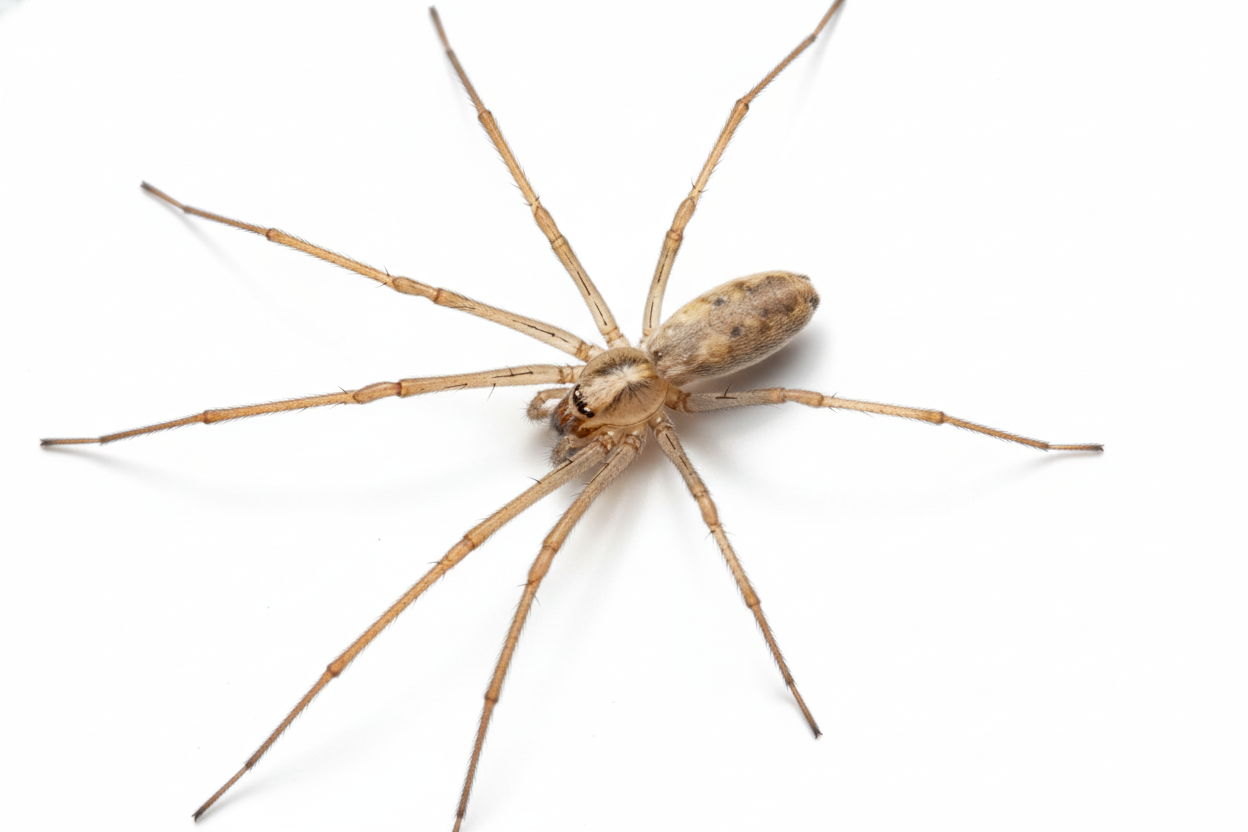
Cellar spiders are easily identified by their extremely long, thin legs and small, oval-shaped bodies. Adults are pale yellow, grey, or light brown in color, with a body length of about 6–9 mm. Their delicate, tangled webs are typically found in corners or ceilings.
These spiders feed on small insects, other spiders, and flying pests such as gnats or mosquitoes that get trapped in their webs. They hang upside down in their webs while waiting for prey and play a beneficial role in natural pest control.
Keep basements, storage rooms, and corners free from clutter and dust. Regularly vacuum spider webs and reduce humidity levels with proper ventilation. Sealing wall cracks and window gaps prevents spiders and insects from entering your home.
Cellar spiders are shy and non-aggressive. They prefer to stay hidden in their webs, often shaking or vibrating them when disturbed. Unlike many other spiders, they rarely relocate and can stay in the same web for long periods if food sources are available.
Female cellar spiders produce egg sacs containing dozens of eggs, which they carry in their mouths until the spiderlings hatch. The young remain nearby before dispersing to build their own webs. Under ideal indoor conditions, their populations can increase gradually.


