
Protect your home or business from black widow spiders by understanding how to identify, prevent, and manage these venomous yet shy web-building arachnids.
Santera specialists are trained to identify, remove, and help prevent infestations of dangerous spiders such as the black widow. Our Assess, Implement, Monitor approach enables our professionals to conduct thorough inspections, apply safe, targeted treatments, and implement preventive measures to keep your space spider-free. From clearing dark corners and webs to sealing entry points and reducing pest food sources, Santera provides complete protection for your property.
Black widows prefer secluded, dark areas such as basements, garages, sheds, crawl spaces, and outdoor structures. They often build irregular webs near the ground, in cluttered areas, or under ledges, stones, and furniture.
Yes. The venom of a female black widow is potent and can cause muscle pain, cramps, and nausea in humans, though bites are rarely fatal. Males and juveniles are less harmful, and black widows usually bite only in self-defense when disturbed.
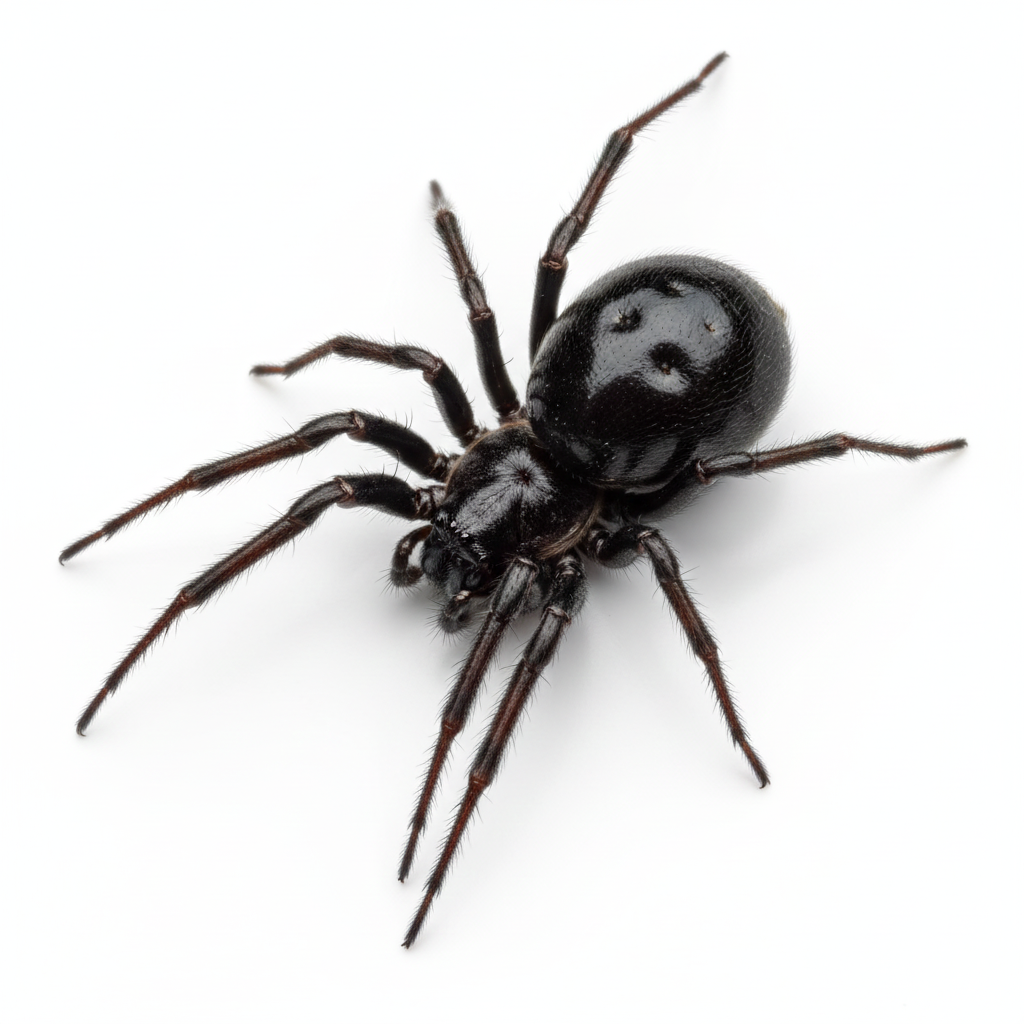
Female black widows are easily recognized by their shiny black bodies and the distinctive red or orange hourglass marking on the underside of their abdomen. They measure about 10–13 mm in body length and have long, slender legs. Males are smaller and lighter in color, often with red or white markings on their backs.
Black widows feed on insects such as flies, beetles, grasshoppers, and mosquitoes that become trapped in their irregular webs. They inject venom to immobilize prey and then consume the liquefied tissues, contributing to natural pest control outdoors.
Reduce clutter in storage areas, garages, and basements to remove potential hiding spots. Seal cracks and crevices around doors, vents, and foundations. Regularly clean and inspect outdoor furniture, sheds, and firewood piles. Wear gloves when working in dark or undisturbed areas where spiders may hide.
Black widows are solitary and non-aggressive unless threatened. Females rarely leave their webs and typically hang upside down to monitor for prey or danger. They prefer warm, dry environments and are more active during the summer months.
After mating, a female black widow produces several egg sacs containing hundreds of eggs each. Spiderlings hatch within a few weeks and disperse by air currents. Only a small number survive to adulthood, but under favorable conditions, black widow populations can grow quickly.


