
Protect your home or business from one of North America’s most venomous scorpions by learning how to identify, manage, and prevent infestations effectively.
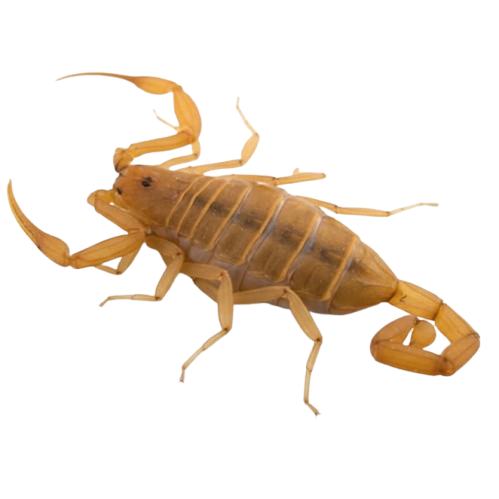
Santera Pros are trained to detect, control, and prevent Arizona bark scorpion infestations with precision and care. These scorpions pose a serious risk of stings, especially in warm, dry regions and residential areas.
Santera professionals perform detailed inspections, locate nesting spots, and apply safe, targeted treatments to ensure your home remains secure. Using the A.I.M. strategy, our experts deliver comprehensive scorpion control with consistent oversight and enduring protection for your property. Experts identify activity zones, apply precise treatments, and secure vulnerable areas to stop re-entry. This systematic process ensures your home remains safe, pest-free, and continuously protected.
They are native to the Southwestern United States, especially Arizona, Nevada, New Mexico, and parts of California. They prefer desert environments, hiding under rocks, tree bark, and debris, but can also be found inside homes, particularly in cool, damp spaces like bathrooms or basements.
Yes. Their venom is highly toxic, and stings can cause intense pain, numbness, or temporary paralysis. While fatalities are rare, medical attention is strongly advised after a sting, especially for children and the elderly.
Arizona bark scorpions are slender and pale yellow in colour, growing up to 7–8 cm long. They have a thin tail, narrow pincers, and a distinct segmented body. Under UV light, they glow a bright bluish-green, making them easy to spot during inspections.
They feed on insects, spiders, and small arthropods, using their pincers to grab prey and their venomous sting to immobilize it. Their feeding activity is highest at night.
Seal gaps around doors, windows, and walls. Remove clutter, firewood, and debris near the house. Keep outdoor lighting minimal, as it attracts insects, a primary food source for scorpions. Regular inspections help prevent hidden infestations.
Arizona bark scorpions are nocturnal and excellent climbers, often found on walls, ceilings, and under bark or rocks. Unlike most scorpions, they can climb smooth surfaces and squeeze through narrow gaps. They become more active during warm months.
Females give birth to live young (up to 30 per brood), which stay on the mother’s back until their first molt. Under ideal conditions, they can live for 5–6 years, allowing colonies to grow quickly if left unchecked.


