
Protect your home or property by staying informed about this remarkable yet potentially dangerous creature and learning how to keep your space secure and free of unwanted arthropods.
What Santera Does —
At Santera, we follow a strategic, multi-step approach tailored to the presence—or potential risk—of large centipedes such as the Peruvian Giant Yellow-leg Centipede. Our technicians first assess whether the species involved is a large centipede or a more common variety, then identify entry points, harborage areas such as damp, dark spaces, and available prey sources. We address contributing environmental factors by reducing moisture, sealing cracks and gaps in foundations and walls, removing clutter or debris near structures, and improving drainage. In higher-risk areas, we implement protective barriers, targeted perimeter treatments, and sealing around structural penetrations such as pipes and vents. Additionally, we focus on reducing or eliminating prey insects that attract centipedes, ensuring effective and long-term control.
While such large species mostly inhabit outdoor tropical environments, if nearby conditions permit (moisture, dark sheltered spaces, prey insects), they may seek refuge.
Yes. The Peruvian Giant Yellow-leg Centipede is venomous. It uses modified front appendages (forcipules) to inject venom into prey.
Not in the way termites or wood-borers do. These predators feed on living creatures such as insects, amphibians, and small vertebrates—they don’t eat wood, fabrics, or damage structural materials.
For this species, natural indoor control options are limited; however, general preventive measures can be effective. Reducing indoor humidity, minimizing prey insects, removing debris, and sealing potential entry points all help lower the risk of infestation.
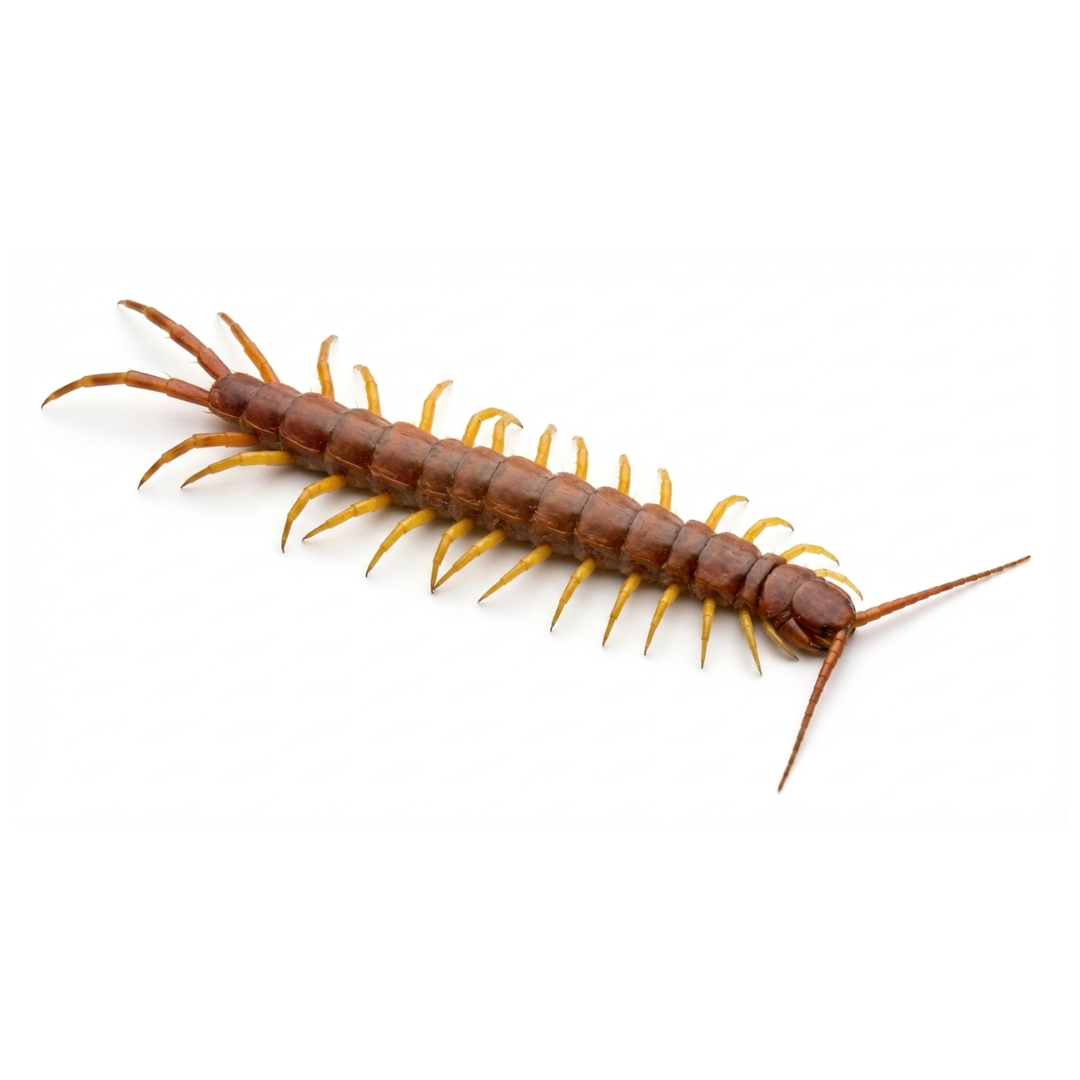
The Peruvian Giant Yellow-leg Centipede is a large, striking centipede known for its dark brown to reddish body and distinctly bright yellow legs. Adults can grow up to 20–25 cm in length, with a flattened, segmented body and long, sensitive antennae. Like other centipedes, it has one pair of legs per body segment and powerful front appendages adapted for hunting
This species is a carnivorous predator that feeds on insects, spiders, and other arthropods, and may also prey on small amphibians, reptiles, or rodents. It uses venomous front appendages to immobilize prey before feeding.
Reduce the likelihood of encounters by controlling moisture levels indoors, fixing leaks, and ensuring proper drainage around buildings. Seal cracks, gaps, and openings around doors, windows, and utility lines. Remove debris, clutter, and organic matter near structures, and reduce populations of insects that serve as prey.
The Peruvian Giant Yellow-leg Centipede is nocturnal and highly active, preferring dark, damp environments such as basements, crawl spaces, bathrooms, and garden areas. It hides during the day in cracks, under debris, or within wall voids and becomes active at night to hunt.
Females lay eggs in moist, sheltered locations, often guarding them until they hatch. The young centipedes emerge as smaller versions of adults and gradually develop additional segments and legs as they mature. While reproduction is slower than many insects, populations can persist if favorable conditions and food sources remain available.


