
Protect your home or business from common earwigs by learning how to identify, prevent, and control these small, moisture-loving insects.
Santera specialists identify entry points, reduce moisture sources, and apply targeted treatments to eliminate earwigs and prevent re-entry. Our methods combine exterior perimeter treatment, habitat management, and moisture control for long-term results.
Find a branch near you and schedule a Santera inspection today.
They seek moisture, shelter, and food, especially in damp weather.
No. They don’t bite or sting and pose no health risks.
They may nibble on leaves or petals, but damage is primarily cosmetic.
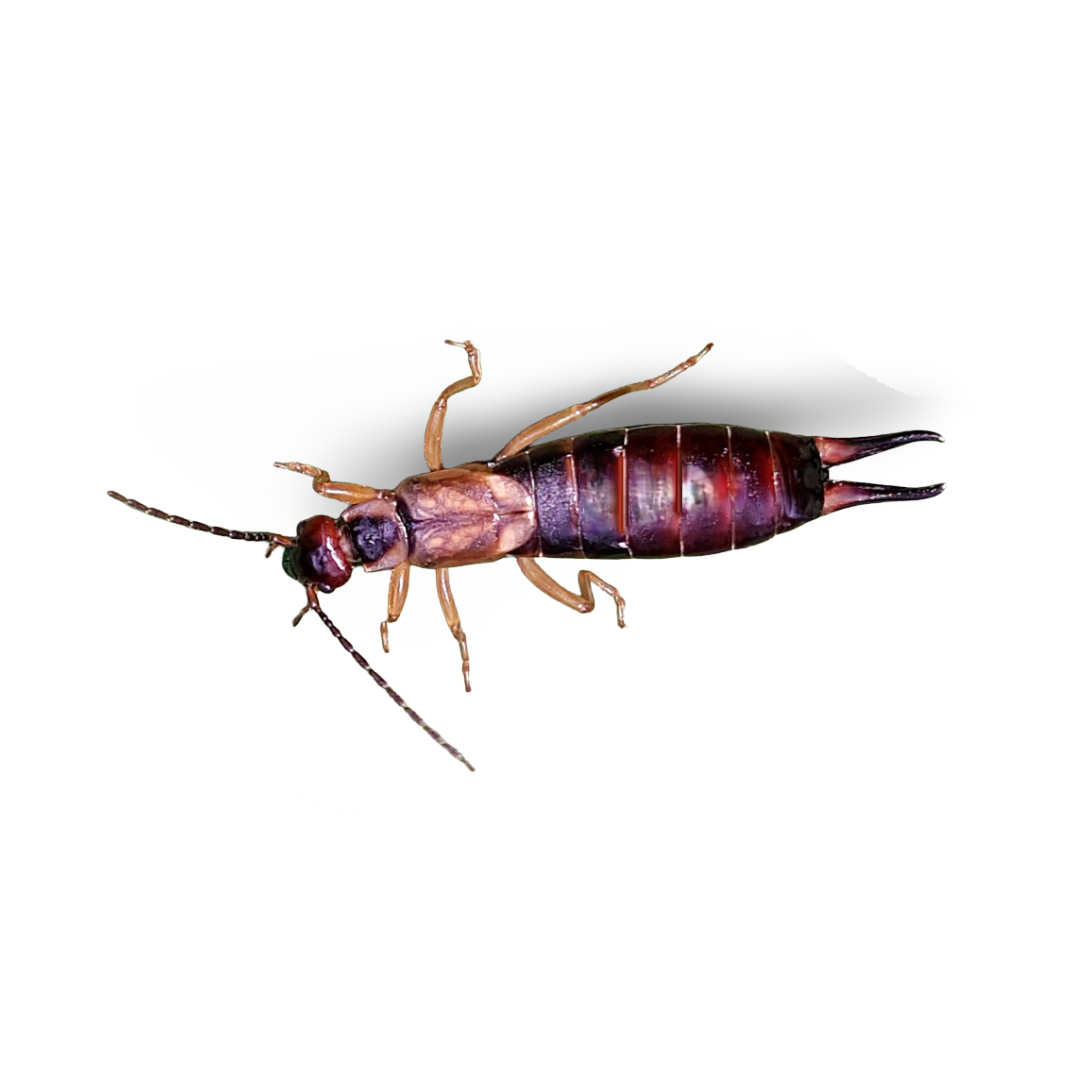
Common earwigs are medium-sized insects with elongated, flattened bodies that are reddish-brown to dark brown in color. They have long antennae and characteristic forceps-like pincers at the end of the abdomen, which are more curved in males and straighter in females. Adults typically measure about 12–16 mm in length.
They are omnivorous feeders, consuming a variety of materials including decaying plant matter, fungi, algae, small insects, and garden vegetation. Common earwigs may feed on seedlings, flowers, and soft fruits, especially when other food sources are limited.
To minimize common earwig activity, reduce moisture around buildings by improving drainage and repairing leaks. Remove leaf litter, mulch, and organic debris near foundations, seal cracks and gaps in walls, doors, and windows, and keep indoor areas dry and well ventilated.
Common earwigs prefer cool, moist, and dark environments and are primarily nocturnal. During the day, they hide in sheltered locations such as under stones, logs, mulch, or within cracks and crevices. They may occasionally enter homes, particularly during warm or humid conditions, but are not aggressive and pose minimal risk to people.
Females lay eggs in underground chambers or protected crevices and exhibit notable maternal care by guarding, cleaning, and protecting the eggs and young nymphs. The nymphs resemble small adults and gradually develop into maturity through a series of molts.


