
Protect your home or business from tropical bed bugs by learning how to identify, prevent, and control them effectively.
What Santera Does
Santera Pros are trained to detect and treat tropical bed bug infestations, especially in warm and humid environments where these pests thrive. Using Santera’s A.I.M. approach – Assess, Implement, Monitor – experts develop a tailored plan to eliminate bed bugs and prevent future outbreaks.
They are most common in tropical and subtropical regions, including parts of Asia, Africa, and South America, and are often found in hotels, dorms, and densely populated housing.
They look almost identical but thrive better in higher temperatures and humidity. Both species feed on human blood and require similar control methods.
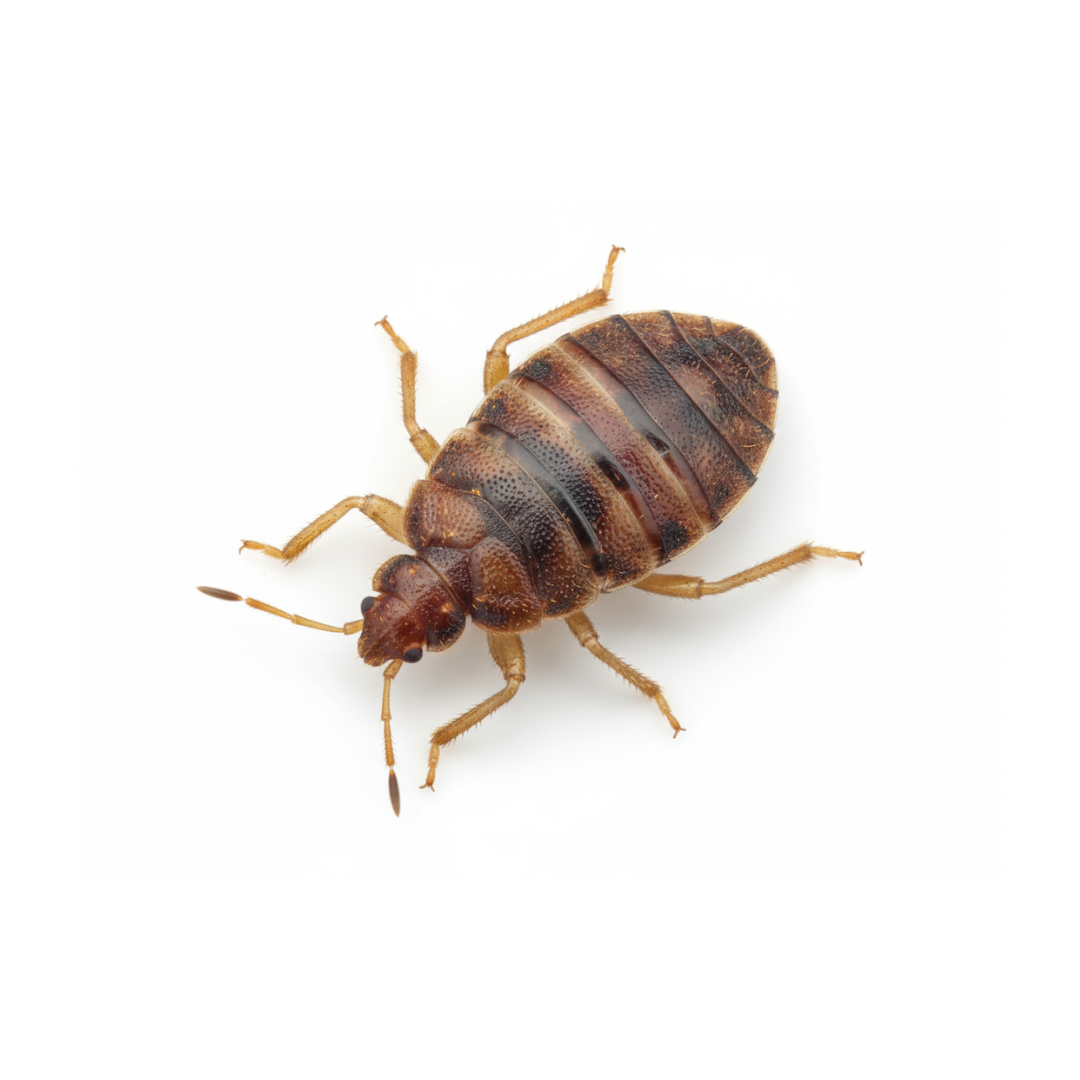
Tropical bed bugs are small, reddish-brown, flat-bodied insects similar to the common bed bug. Adults grow to about 5–6 mm long and become darker and rounder after feeding.
They feed exclusively on human blood and are most active at night. Their bites often appear in lines or clusters and cause itching or irritation.
Inspect bedding, furniture, and walls regularly in humid environments. Avoid bringing second-hand furniture indoors without inspection, and use protective mattress covers to reduce hiding spots.
These pests prefer warm, humid areas and can spread rapidly through luggage, furniture, and shared walls. They hide in tight cracks near sleeping areas during the day and come out at night to feed.
A female can lay hundreds of eggs in her lifetime. Under ideal conditions, eggs hatch within 7–9 days, and new adults mature quickly, allowing infestations to grow rapidly if untreated.


